
Commercial VenuesVending ChairsSite PlanningBuyer Checklist
Commercial massage chairs are used in airports, transit stations, shopping malls, hotels, spas, gyms, offices, waiting areas, entertainment venues and tourist attractions.
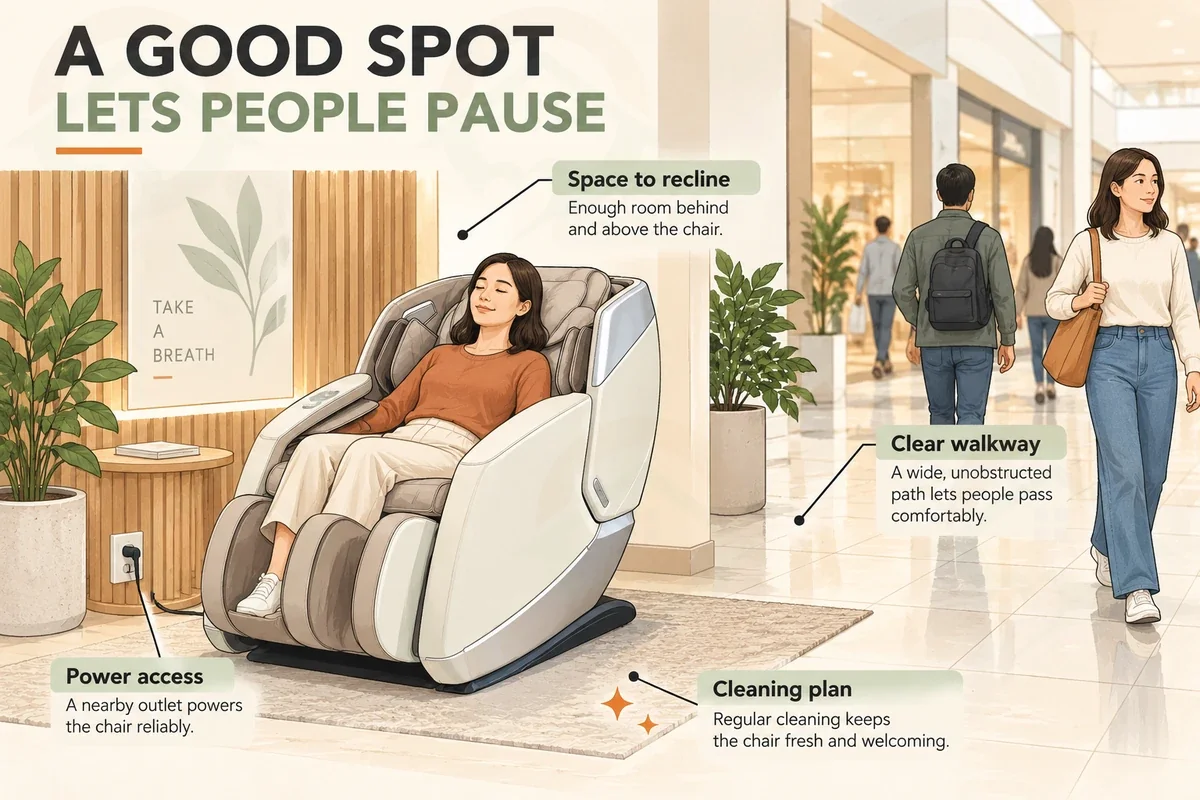
The best location is not simply the one with the most foot traffic: people need a reason to pause, enough room to use the chair safely, and a workable plan for cleaning, access and upkeep.
A commercial massage chair is intended for shared use in a business setting. Depending on the model, it may be offered as an amenity or configured for paid sessions.
New to the product? Start with What Is a Massage Chair?.
10 Places Where Commercial Massage Chairs Are Used
The venues below are examples, not a ranking by sales or profitability. In each case, placement and operating model matter as much as the venue name.
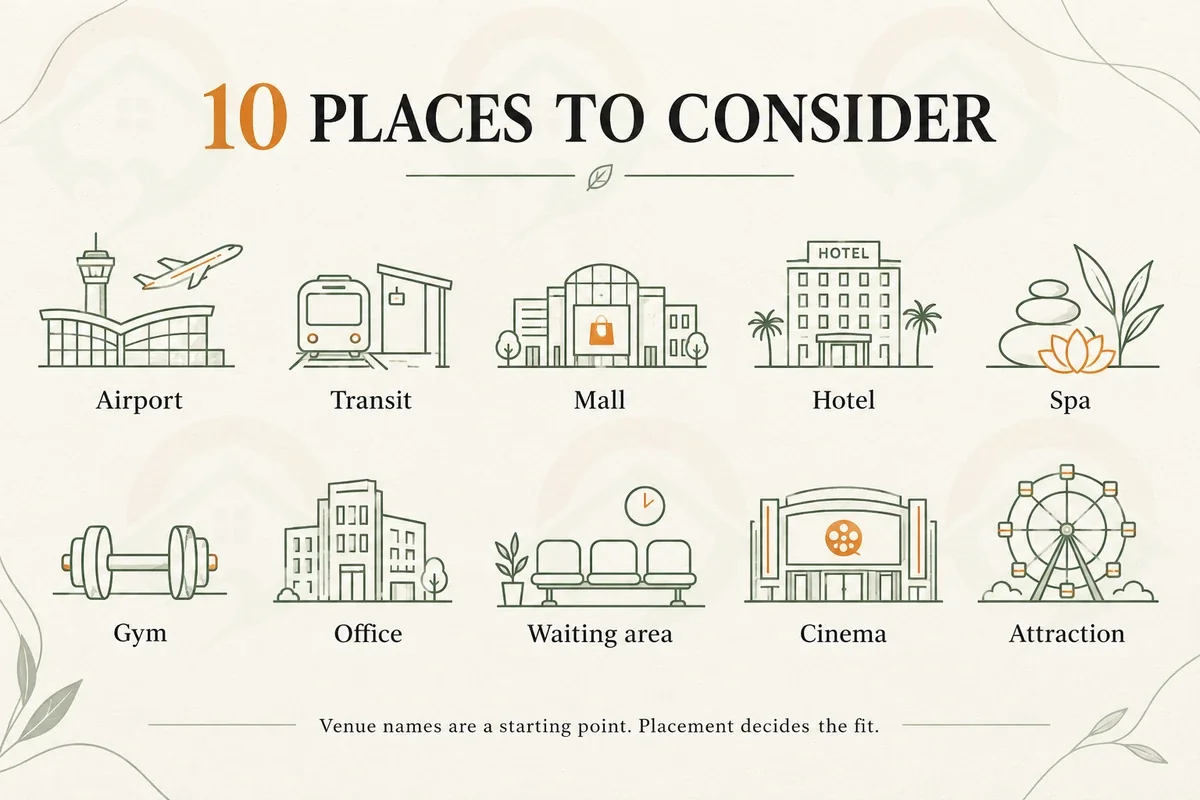
1. Airports
Airports are a familiar setting for pay-per-use chairs because passengers often have time between flights. Possible locations include gate-adjacent seating, lounges and designated rest areas.
Before selecting a spot, confirm terminal permission, electrical access, walkway clearance and who will clean and service the chair.
For airport-specific considerations, see Best Commercial Massage Chairs for Airports.
2. Train Stations, Bus Terminals and Ferry Ports
Waiting halls and other designated seating areas can give travelers time for a short session. A first-time visitor should be able to understand the controls and price before paying.
Check how the chair will be powered and connected, and whether the operator has permission to place it where it will not obstruct circulation.
3. Shopping Malls
Mall rest areas, seating near food courts and cinema-adjacent zones may suit vending chairs. A vacant corner is not automatically a good location: look for a place where shoppers can sit without blocking movement and where someone can wipe the chair and handle service calls.
Match the chair's finish to the mall's environment.
4. Hotels and Resorts
A hotel may offer a chair as an included guest amenity or charge separately. Consider wellness rooms, fitness areas and quiet lounge spaces rather than assuming any lobby corner works.
Confirm noise, cleaning responsibility and whether access will be guest-only, staff-managed or pay-per-use.
5. Spas and Wellness Studios
A chair can complement a spa's existing services or provide a relaxation option while guests wait. It is not a substitute for a therapist's treatment.
A staff-managed setup often makes sense where reception already controls appointments and guest access; agree on session length and cleaning between users.
6. Gyms and Fitness Centers
Gyms can position chairs in a supervised relaxation area and include sessions with membership or charge per use. Prioritize wipe-clean surfaces and easy-to-understand controls.
The venue should decide who can use the chair, when it will be cleaned and whether it will be presented solely as relaxation rather than a recovery or medical treatment.
7. Offices and Corporate Wellness Rooms
Offices typically use chairs as a shared employee amenity in a break or wellness room. Check the room's power supply, available recline clearance, noise and an access or booking rule that prevents one user from monopolizing it.
A payment terminal is unnecessary unless the employer specifically wants per-session charging.
8. Clinics and Waiting Areas
Some clinics and wellness facilities may offer chairs in a waiting or family area, subject to the venue's policies and suitability checks. Present the chair as a comfort amenity, not a medical treatment.
Staff should decide whether the space is appropriate, who may use it and how shared surfaces are cleaned.
9. Cinemas and Entertainment Venues
Visitors may have time before a show or between activities. A lobby or rest area can suit a paid chair if it stays clear of entry and exit routes.
Put the session price and duration where a first-time visitor can see them, and arrange routine cleaning and a contact for faults or refunds.
10. Tourist Attractions and Theme Parks
Rest zones and visitor centers may have visitors who want a short break. Protect the chair from weather and other conditions beyond its specified installation environment; do not assume an indoor commercial model is suitable outdoors.
Check power, accessible circulation, cleaning frequency and who will service the unit.
Vending vs Staff-Managed: Which Operating Model Fits?
These are operating models, not a universal division between two chair constructions.
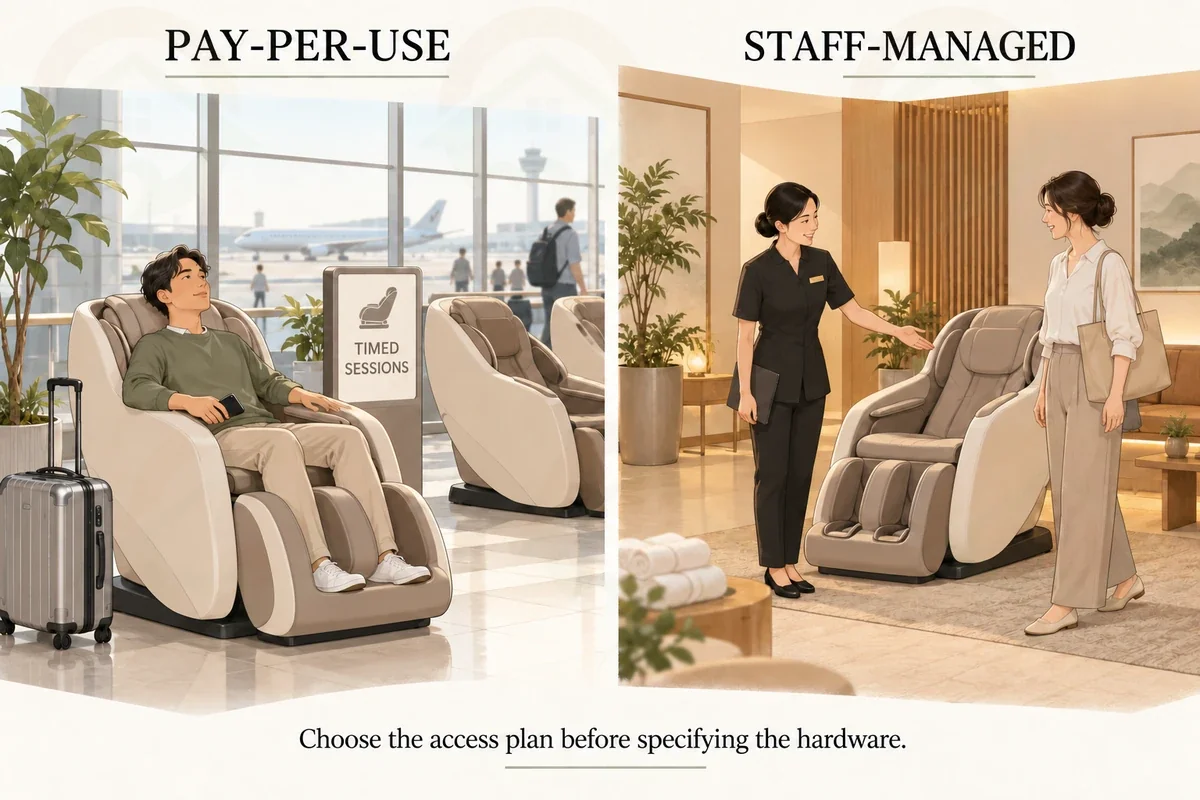
| Operating question | Vending / pay-per-use | Staff-managed amenity |
|---|---|---|
| Who starts a session? | User pays through the installed system, then starts or receives a timed session. | Venue or staff controls access; a payment device is not required. |
| Typical fit | Transit hubs, malls and entertainment rest areas with suitable permission and oversight. | Hotels, spas, offices, clinics and some gyms. |
| What must be arranged? | Price display, payment setup, connectivity where required, cleaning, fault response and any refund procedure. | Access or booking rules, cleaning, staff instructions and upkeep. |
| What decides the purchase? | The quoted chair, payment hardware, destination-market compatibility and the operator's support plan. | Comfort, appearance, available space and the venue's access plan. |
What Is a Vending Massage Chair?
A vending massage chair is configured to accept payment for a timed session without a staff member starting every use. Depending on the quoted setup, payment options may include coins, banknotes, cards or QR-based methods; a QR label alone does not prove that a particular local wallet or acquirer is supported.
Remote status and reporting also depend on the installed controller, provider and connection.
Our operator guides cover cashless payment, cash hardware, remote monitoring and WiFi versus SIM connections.
Do not assume cashless payments always stop—or always continue—during an outage. Some providers document limited offline modes: Nayax describes an offline option for eligible EMV contactless/NFC setups, and activation requires provider permission.
That is not evidence that a quoted Sweet Home chair, a QR wallet or its acquiring agreement supports offline sales. Cash may keep working only if the installed acceptor and controller operate locally; test the complete configuration before rollout.
Browse our vending massage chair range.
What Is a Staff-Managed Massage Chair?
In a staff-managed setup, the venue decides when and how a chair is used, often as part of a guest, member or employee service. It may not need a payment device.
Staff can explain the controls and manage access and cleaning, but the chair still needs a suitable installation space and a maintenance plan. A venue could charge guests through its own front desk; staff-managed does not necessarily mean free.
How to Choose: A Five-Point Venue Check
- Purpose: Is each session sold, or is the chair an amenity supporting another service?
- Placement: Measure the footprint and the reclined position. Confirm power, circulation and the venue's permission. Use our installation space and clearance guide.
- Access and upkeep: Who explains use, cleans shared surfaces, handles faults and answers refund requests if sessions are paid?
- Payment and connection: For vending, name the destination market and required payment methods. Verify the exact terminal, provider, network requirements, fees and outage behavior on the quoted setup.
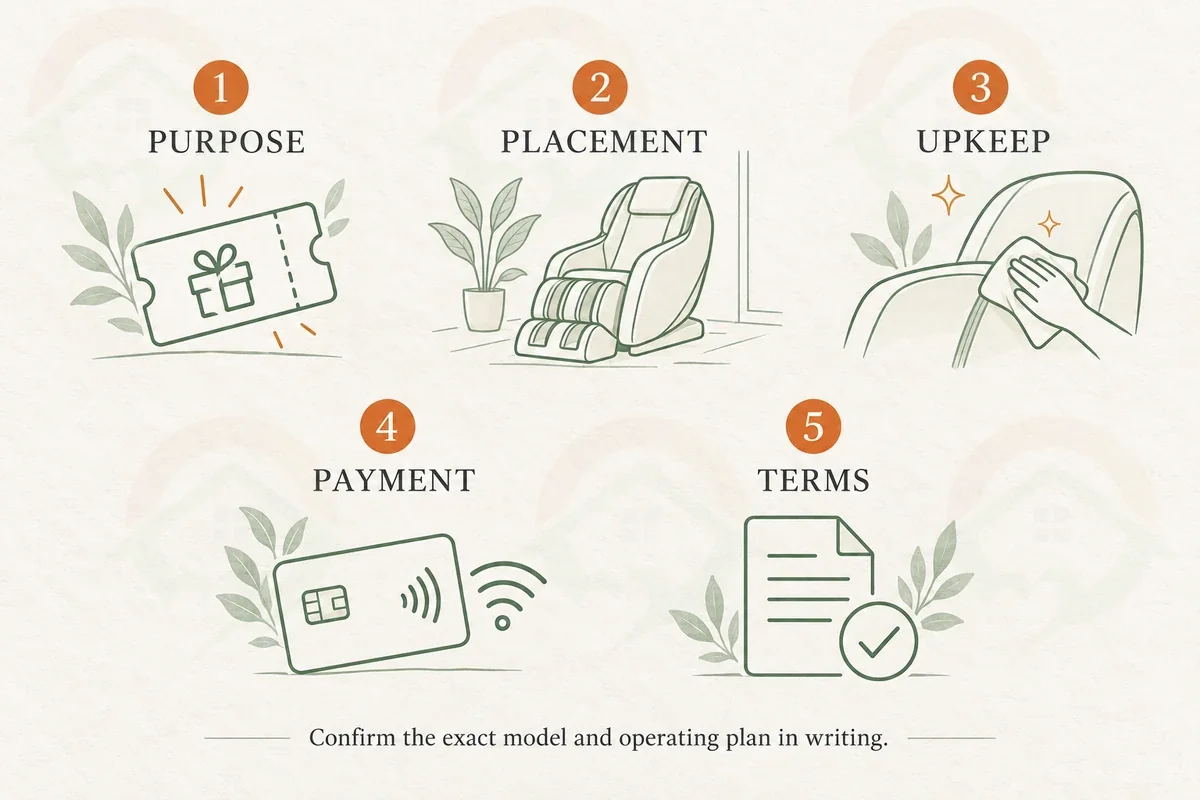
High foot traffic alone does not establish revenue. Observe whether people can actually pause at the proposed location and get written permission and operating responsibilities in place before ordering.
Frequently Asked Questions
Where are commercial massage chairs used?
They can be used in airports, transit stations, malls, hotels, spas, gyms, offices, waiting areas, cinemas and tourist attractions—where the chair has suitable space, power, permission and upkeep.
Which venues suit vending massage chairs?
Transit hubs, malls, entertainment venues and attraction rest areas are candidates if visitors have time to pause and the operator can arrange a compliant location, payment setup and service. A venue label alone does not predict sales.
How does a commercial massage chair differ from a home chair?
The intended use and configuration matter. A chair sold for shared commercial operation may offer payment hardware and service arrangements that a home model does not, but these features are not universal.
Can a commercial massage chair accept cashless payment?
Some vending configurations can accept cards or supported QR wallets. Availability depends on the terminal, provider, local acquiring arrangements and quoted model. Ask for a market-specific written payment specification rather than assuming every payment option is built in.
Prepared by Sweet Home Technical Team
Cindy
Sweet Home Technical Team
Part of Sweet Home's in-house technical team. Cindy writes Knowledge guides that help buyers compare massage chair options and site requirements.
Disclosure: Sweet Home manufactures massage chairs and may supply products discussed here. Model specifications, commercial-use terms and market availability require confirmation for each order.
Choosing a chair for your venue?
Send the venue, destination country, quantity and payment preference. Ask for model-specific specifications and service terms in writing.
Contact UsWhatsAppEmailRelated product pages
898-C64 3D SL-Track Massage Chair for OEM BuyersCashless Payment Vending Massage Chair