
This is Episode 1 of our Component Deep Dive series. In this guide we go deep on massage chair leather — PVC, Semi-PU, Full PU, and hydrolysis-resistant PU — so you can verify material quality instead of trusting a label.
PVC or PU — Why Is Everyone Asking About Leather on Massage Chairs?
Let's be direct: the leather covering a massage chair is not just about aesthetics. It's the surface your customer sits on for 15–30 minutes per session, often with the heating function running. Sweat, body heat, and humidity attack the material every single use.
If you've sourced massage chairs from China, you've seen the options: PVC, Semi-PU, Full PU, "hydrolysis-resistant PU" — four terms that get thrown around as if they were different price tiers. But material choice in this category is not a simple good-better-best ladder.
The reason everyone asks is because the leather directly contacts skin in a high-heat, high-humidity environment. A lounge sofa can get away with thin polyester-based PU because it sees dry skin and occasional use.
A massage chair is different: 15–30 minute sessions, body-weight roller pressure, active heating, and sweat. That combination destroys standard upholstery logic.
The surprise? The industry workhorse isn't "Full PU" — it's Semi-PU. By the end of this article, you'll understand exactly why.
Should I Even Consider PVC for My Massage Chair Line?
PVC (Pure PVC Calendered Leather) sits at the bottom of the price list. Here's what you're getting:
| Property | PVC |
|---|---|
| Feel | Plastic-heavy, cold and stiff in low temperatures |
| Abrasion Resistance | Highest among all four — tough surface resists roller friction |
| Hydrolysis Resistance | No PU layer, so no hydrolysis — but plasticizer migration is a real problem |
| Lifespan | 2–3 years — yellows, hardens, cracks along fold lines |
| Breathability | Almost zero — sweaty, sticky after extended sessions |
| Odor | Strong chemical plastic smell, worse when heated |
| Cost | Lowest of all four categories |
* Lifespan figures are typical values under normal use; exact durability varies by usage frequency, climate, and maintenance.
So should you consider it? In developed markets like North America and Europe: no. A distributor buying PVC massage chairs will face return rates that destroy margins. The odor alone triggers consumer complaints, and the material's rapid visible aging makes the brand look cheap.
The only scenarios where PVC is viable:
- Single-use applications like trade show demo units that never see real consumer use
- Developing markets where price is the only purchase driver
For any serious B2B buyer planning to sell through retail or e-commerce in a quality-conscious region, PVC is a liability, not an option.
What Is Semi-PU and Why Does It Dominate the Massage Chair Industry?
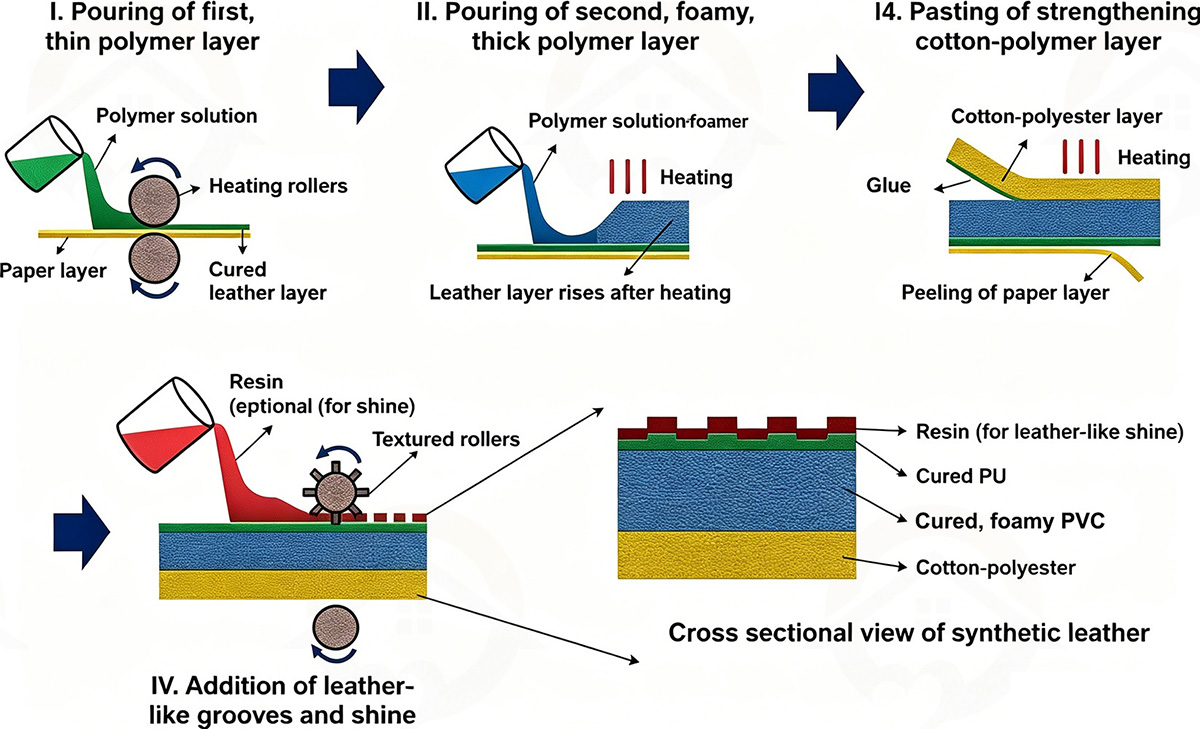
Semi-PU is a laminated construction: a PVC middle layer with a thin PU surface skin. It is not "half-PU" in a derogatory sense — it is a deliberate engineering solution optimized for massage chair conditions.
| Property | Semi-PU |
|---|---|
| Feel | Smooth, less plastic than PVC, slight stiffness in winter but far better than pure PVC |
| Abrasion Resistance | Excellent — the tough PVC core provides mechanical durability that rollers don't cut through easily |
| Hydrolysis Resistance | The PVC core does NOT hydrolyze. Thin PU surface may degrade eventually, but the material won't powder from the inside out |
| Lifespan | PU surface: 3–5 years. PVC core yellows/hardens eventually but remains structurally sound |
| Breathability | Minimal — still stuffy in summer with extended sessions |
| Odor | Slight plastic smell, dissipates within days of airing |
| Cost | Mid-range — best value among all four categories |
* Lifespan figures are typical values under normal use; exact durability varies by usage frequency, climate, and maintenance.
The massage chair's greatest enemy is hydrolysis — moisture-driven chemical breakdown of PU esters. When a user sits for 30 minutes with heat on, sweat seeps into any exposed material.
A regular Full PU (polyester-based) absorbs that moisture and breaks down from the inside. Semi-PU puts a hydrolysis-proof PVC shield between the foam and the user.
That's why, across the export orders we have handled, 70%+ of massage chair programs specify Semi-PU. It is the safe default — not the absolute best in any single category, but the best balance of durability, feel, and cost.
B2B takeaway: Unless you have a specific reason to upgrade, start with Semi-PU.
Semi-PU leather layers:
Is Full PU Actually Better — or Just More Expensive?
Regular Full PU (polyester-based) feels lovely. Soft, supple, close to real leather, not cold in any season. It sounds like the premium choice.
Here is the ugly truth: Regular Full PU fails on massage chairs faster than Semi-PU.
| Property | Regular Full PU (Polyester-based) |
|---|---|
| Feel | Soft, fine touch, close to genuine leather, temp-stable |
| Abrasion Resistance | POOR — soft surface wears through under roller friction, exposes foam layer |
| Hydrolysis Resistance | VERY POOR — 2–3 years in humid + heat conditions = powdering, delamination |
| Lifespan | Surface cracks at 2–3 years in humid climate; ~4–5 years in dry climate |
| Breathability | Better than Semi-PU but still limited |
| Odor | Minimal |
| Cost | Higher than Semi-PU |
* Lifespan figures are typical values under normal use; exact durability varies by usage frequency, climate, and maintenance.
Polyester-based PU absorbs moisture from sweat and ambient humidity. Inside the material, the ester bonds hydrolyze — water molecules attack and break the polymer chains. The heating function accelerates this reaction 2–3x.
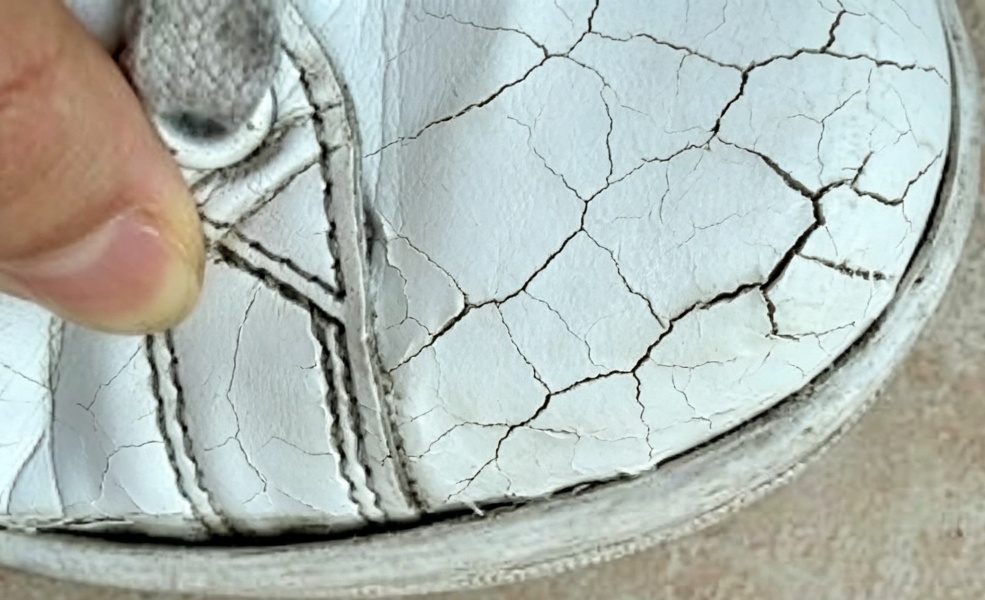
After 2–3 years in a humid climate, the surface cracks, delaminates, and turns to powder (see this technical comparison of leather and artificial leather performance).
Mechanically, the soft surface wears faster under roller pressure. The same friction that a Semi-PU core shrugs off can abrade untreated Full PU, especially where the back rollers press against the spine.
The B2B trap: When a supplier offers "Full PU" at a mid-range price, many buyers think they are getting an upgrade.
Unless the specification sheet explicitly says polyether-based (hydrolysis-resistant), assume it is polyester — and polyester Full PU will fail on a heated, high-contact massage chair.
Full-PU surface cracks faster:
When Should I Pay Extra for Hydrolysis-Resistant PU?
Hydrolysis-Resistant Full PU (polyether-based) is the true premium material for massage chairs.
| Property | Hydrolysis-Resistant PU (Polyether-based) |
|---|---|
| Feel | Near-genuine leather, soft and elastic, stable across all temperatures |
| Abrasion Resistance | Better than regular Full PU — surface is treated or cross-linked for added wear resistance |
| Hydrolysis Resistance | EXCELLENT — polyether backbone resists moisture breakdown. 5–8 years even in humid + heated conditions |
| Lifespan | 5–8 years — longest of all four categories |
| Breathability | Slightly better than regular Full PU |
| Odor | Almost none |
| Cost | Highest of all four categories — but justified |
* Lifespan figures are typical values under normal use; exact durability varies by usage frequency, climate, and maintenance.
When to choose it:
- Commercial applications: Hotels, spas, gyms, clinics — chairs running 5–10 cycles per day where downtime and visible wear are unacceptable
- High-humidity markets: Southeast Asia, coastal cities, tropical regions — any environment where ambient moisture is a constant threat
- Flagship models with strong heating: If your brand's signature feature is heat therapy, hydrolysis resistance is non-negotiable
How to verify, not just trust the label:
2. Get direct confirmation: "Is this polyether-based or polyester-based PU?" If they hesitate, move on.
3. Request anti-hydrolysis additive specifications — credible factories share additive names or test result data.
B2B takeaway: If you target the premium segment or commercial clients, hydrolysis-resistant PU is the only correct choice. It's expensive, but so are returns and brand damage.
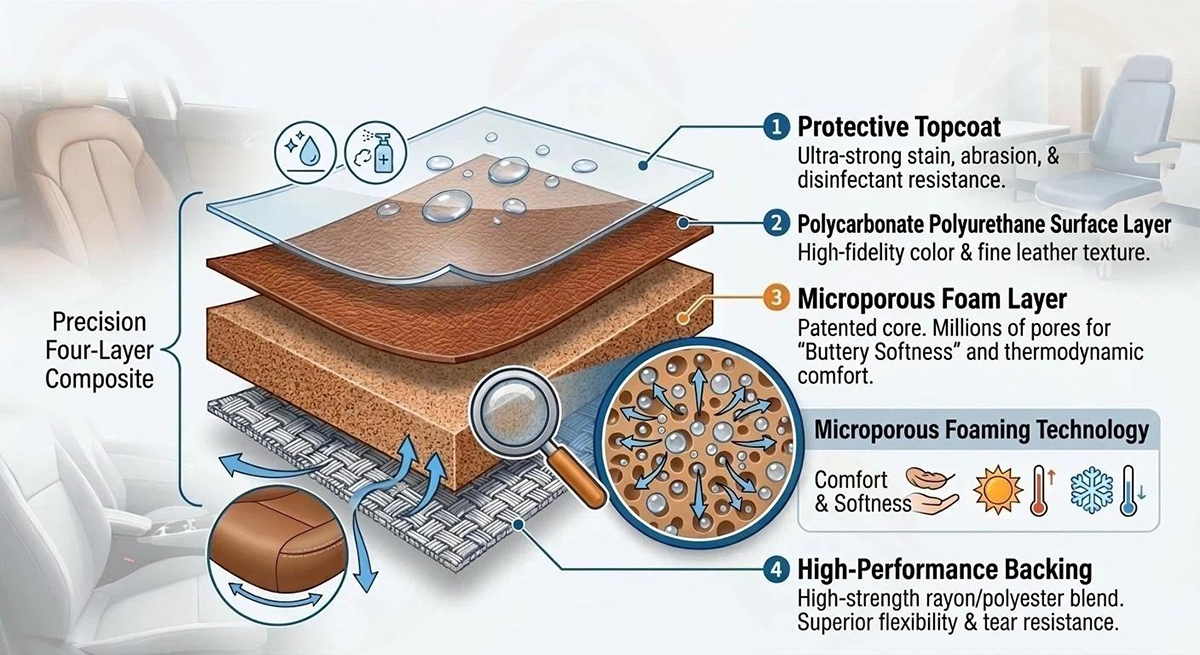
Hydrolysis-resistant polyether full PU layered structure diagram:
Quick Decision Matrix — Which Leather for My Market?
Note that regular Full PU (polyester) does not appear as a recommendation — because for massage chairs, it shouldn't.
| Market Segment | Climate / Duty Cycle | Recommended Leather | Why |
|---|---|---|---|
| Ultra-budget / developing markets | Dry, occasional use | PVC or Semi-PU | PVC only if price is the sole factor; Semi-PU is safer |
| Mid-range residential (dry climate) | Moderate use | Semi-PU | Best balance of cost and real-world durability |
| Mid-range residential (humid climate) | Humid, heat function used | Semi-PU (NOT regular Full PU) | PVC core prevents hydrolysis failure |
| Premium residential | Any climate, high expectations | Hydrolysis-Resistant PU | Soft feel with 5–8 year lifespan |
| Commercial: hotel, spa, gym | Heavy daily use | Hydrolysis-Resistant PU | Only material that withstands constant use and cleaning |
| Flagship models with aggressive heat | High heat cycles | Hydrolysis-Resistant PU | Polyether resists heat-accelerated breakdown |
The Complete B2B Leather Verification Checklist
When you step into a factory or receive material samples, don't rely on a spec sheet. Verify. Here is a 10-point checklist that separates genuine quality from marketing claims.
1. Visual Inspection
● Surface grain: Full PU has a consistent micro-porous texture; PVC has a flat, repetitive emboss pattern.
● Edge and backing: Semi-PU shows a clear PVC layer (white/grey) under a thin PU skin; Full PU is uniform throughout.
● Color consistency: Put 3 same-color samples side by side under daylight — any shade variation signals poor QC.
2. Touch & Stretch Test
● Stretch test: PVC barely stretches; Semi-PU stretches slightly and rebounds fast; Full PU stretches more with slow rebound.
● Surface friction: Rub your palm firmly 10 times on the surface — PVC feels sticky/warm; PU surfaces stay smooth.
● Cold sensitivity: Refrigerate a sample to 5°C for 20 minutes. PVC becomes stiff and plastic-like; Semi-PU turns slightly stiff; PU stays supple.
3. Scratch & Abrasion Test
● Fingernail scratch: PVC leaves a permanent white mark; Semi-PU shows a slight temporary trace; quality Full PU is almost invisible.
● Coin-edge rub: Rub the edge of a coin 20 passes on the same spot. Low-quality Semi-PU wears through the thin PU layer; quality Semi-PU holds.
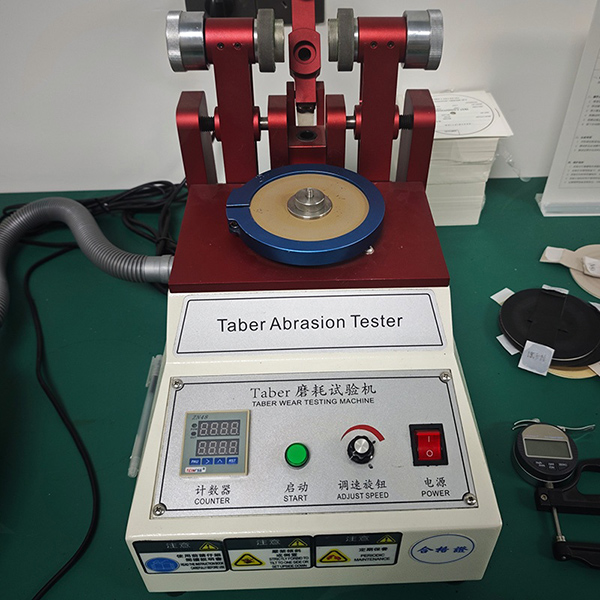
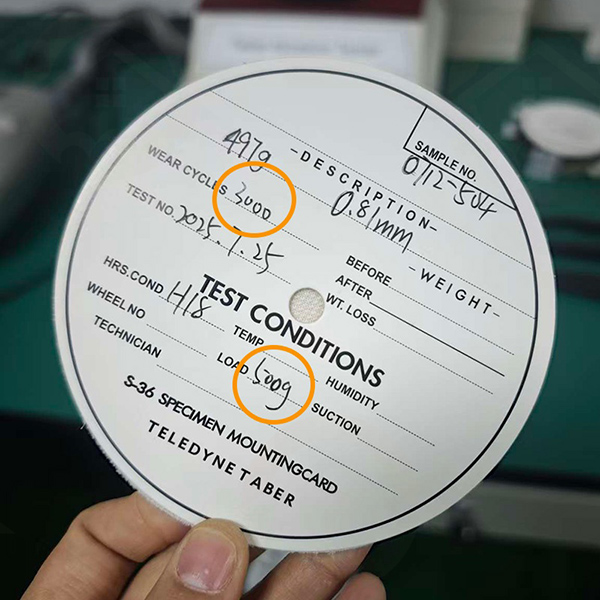
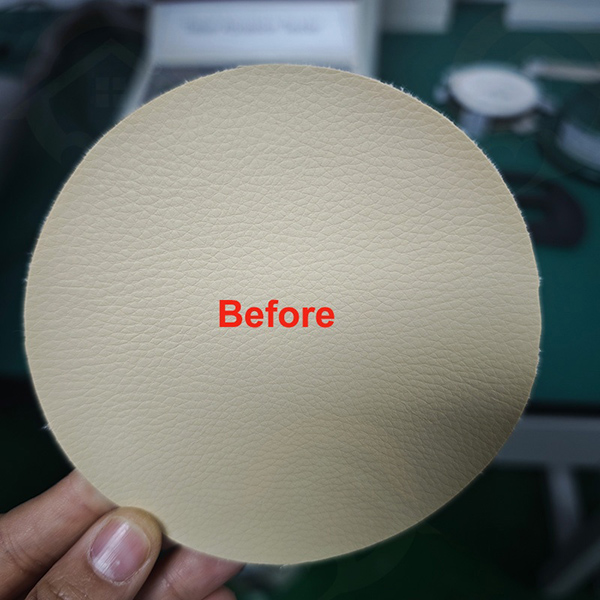
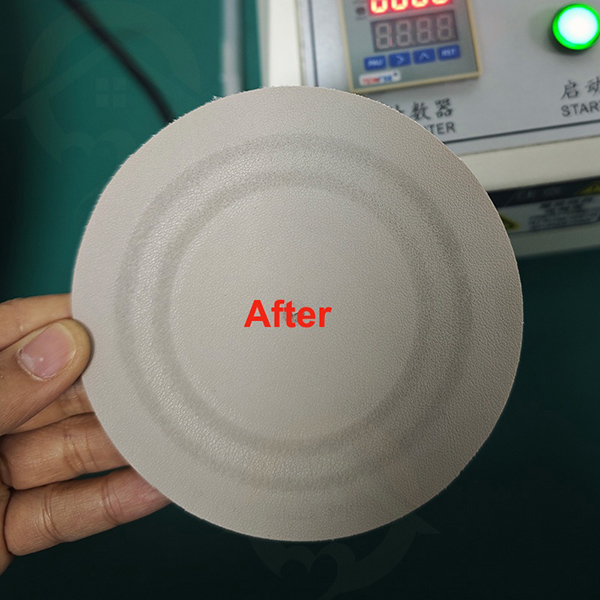
● Martindale report: Request the factory's Martindale abrasion test report — cycles to wear-through. Minimum acceptable: 50,000 cycles for Semi-PU, 100,000+ for commercial-grade hydrolysis-resistant PU.
4. Hydrolysis Verification (Critical — This Is the One That Separates Fact from Marketing)
● Ask directly: "Is this polyester-based or polyether-based PU?" — polyether = hydrolysis-resistant; polyester = will fail.
● Demand test report: The report should show hours or cycles before surface change.
● Factory quick test: Ask the factory to microwave a sample wrapped in a damp cloth for 30 seconds on high heat. Regular PU will show surface wrinkling or softening; hydrolysis-resistant PU remains intact.
5. Odor Check
● Fresh sample sniff: PVC = strong plastic/chemical smell; Semi-PU = mild, should dissipate within days; Full PU/Hydrolysis-Resistant PU = minimal to none.
● Heat test: Use a hairdryer on a sample at medium heat for 30 seconds. PVC intensifies (plasticizer outgassing); Semi-PU releases slight smell; PU stays clean.
6. Burn Test (Ask the Factory to Demonstrate)
● Burn a small edge: PVC self-extinguishes when flame is removed, produces black smoke and an acrid chlorine smell (this is the chlorine in PVC burning). PU burns with a cleaner flame, white/gray smoke, and less offensive odor.
7. Factory Quality Documentation Checklist
● Check applicable California material-disclosure requirements for the exact model.
● Martindale abrasion test report (cycles to wear-through).
● Hydrolysis test report (duration before failure).
8. Factory Walk-Through Questions
● "Which leather type do you use on your best-selling model?" (not the most expensive one — this reveals the factory's real confidence in the material).
● "What is your return rate specifically related to leather issues — cracking, peeling, odor?" (a factory that tracks this is a factory that manages quality).
● "Can you show me the leather supplier's certificate of analysis for this batch?"
● "How do you store leather rolls? Temperature, humidity, UV exposure?" (improper storage kills material properties before the leather is even cut and sewn).
9. Comparative Visual Archive
● Take 3–5 close-up photos of each material at different angles and lighting, including edge cross-sections.
● Record a short video of the stretch/flex test for each material — invaluable when comparing suppliers weeks later.
● Photograph the cross-section/edge to document the layer structure (PVC core vs uniform PU).
● Keep sealed sample bags labeled with date, batch number, and supplier name for shelf-life tracking.
10.
● What is covered: cracking? peeling? fading? odor?
● What is excluded: "improper use," moisture damage, cleaning agents? (vague exclusions can void all claims).
● Replacement cover price — if you offer after-sales service, you need to know the consumables cost.
Conclusion: Choose Leather Like It Determines Your Brand Reputation — Because It Does
The mechanism, the frame, the airbags — all of them are hidden inside the chair. The leather is what your customer sees, touches, and smells every single day.
Do not let the marketing term "Full PU" make your decision for you. Verify the chemistry, match the material to your customer's climate, and test it under conditions that simulate real use — not just a showroom inspection.
Semi-PU has earned its place as the industry workhorse by surviving where polyester Full PU fails. Hydrolysis-resistant PU delivers genuine premium durability when the application demands it.
Component Deep Dive Series
Joe Fan — Manufacturing & Product Development Manager
Disclosure: Sweet Home is the manufacturer behind these chairs, and the service data throughout this series comes from our own repair logs and production line — shared so buyers can recognize these failure patterns before they reach a container.
Quick audit: is your leather spec complete?
1. PU/PVC type named on the spec sheet? 2. Hydrolysis test data available on request? 3.
Two or more unchecked? Send us your current spec.