
Sourcing Zero-Gravity Massage Chairs isn’t about finding the cheapest factory. It’s about finding the right one.
Here’s a story that should make any buyer pause: a widely shared report told of a buyer who dropped a quoted amount on a “luxury Japanese” massage chair.
When he opened it up? He found a few cheap Chinese-made motors (worth about a quoted amount total) and a couple of concrete blocks added purely for weight. Ouch.
That’s an extreme scam, sure. But it’s a perfect warning for any B2B buyer: in this industry, the lowest price is usually a trap.
Your brand’s reputation, your profit margins, and your sanity depend on one thing — picking a manufacturer that delivers real quality, not just a low quote.
The good news? Demand for zero-gravity massage chairs is exploding. Home retailers, high-end spas, boutique hotels, and senior care centers are all Sourcing Zero-Gravity Massage Chairs. This guide will turn you from a nervous newbie into a savvy sourcing pro.
The category is growing on a real curve: IMARC Group valued the global massage chair market at a published market figure in 2025 and projects it to reach a published market figure by 2034, per the IMARC massage chair market report.
Why Zero-Gravity Chairs Are Your Next Bestseller
Forget fidget spinners. This is a high-ticket item with serious B2B potential. Here’s why zero-gravity chairs are a smart bet:
- Consumers already want them. “Zero gravity” is a magic phrase. People immediately think of NASA-inspired, weightless relaxation — the recline angle mirrors NASA research on the neutral body posture. It sells itself.
- Bigger tickets, better margins. Unlike cheap gadgets, massage chairs command high retail prices. That leaves plenty of room for you to make a healthy profit.
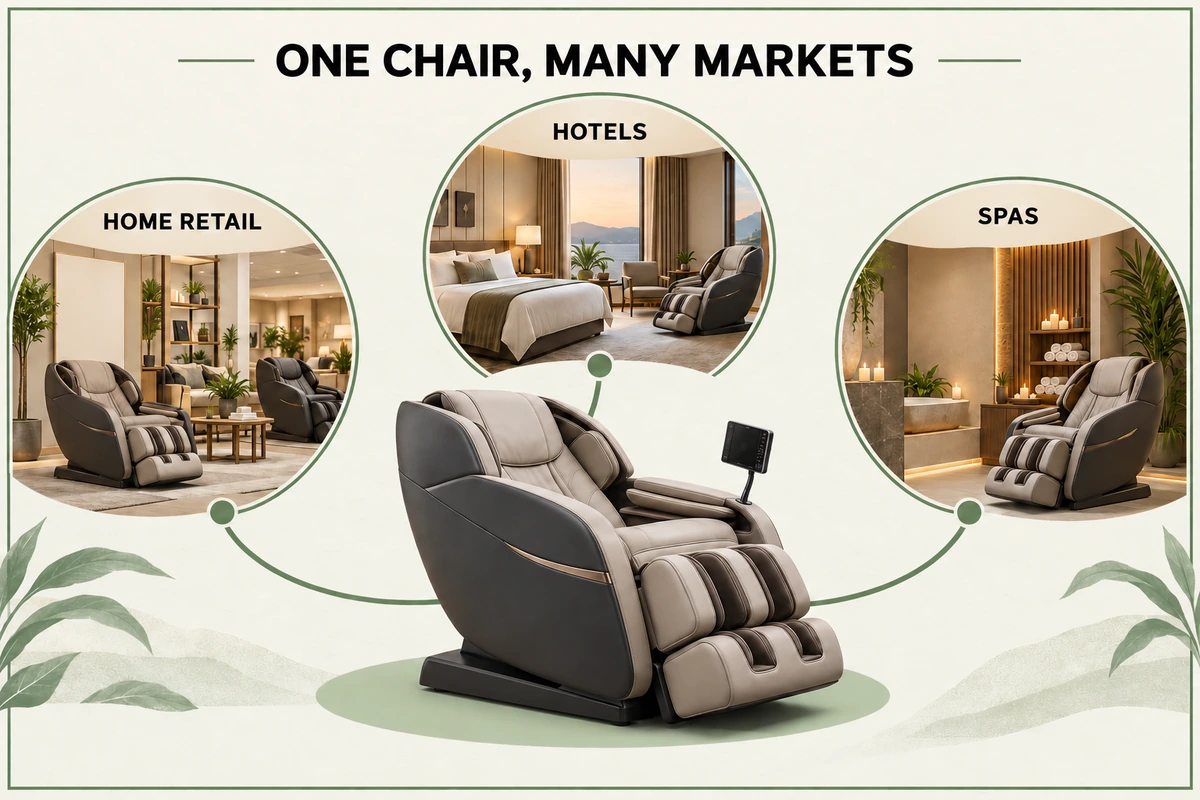
- One product, many markets. It’s not just for homes. A premium chair can be a hotel suite’s centerpiece, a spa’s luxury upgrade, or a rehab tool in a senior facility.
Tech deep dive: if you’re curious about the how behind the magic, read our detailed breakdown: EP10.0: Zero Gravity Mechanism Explained.
The 5-Point Checklist: How to Judge a Factory Before You Buy
Don’t just scroll through Alibaba and pick the shiniest listing. Be a detective. Here’s your interrogation checklist for any potential supplier.
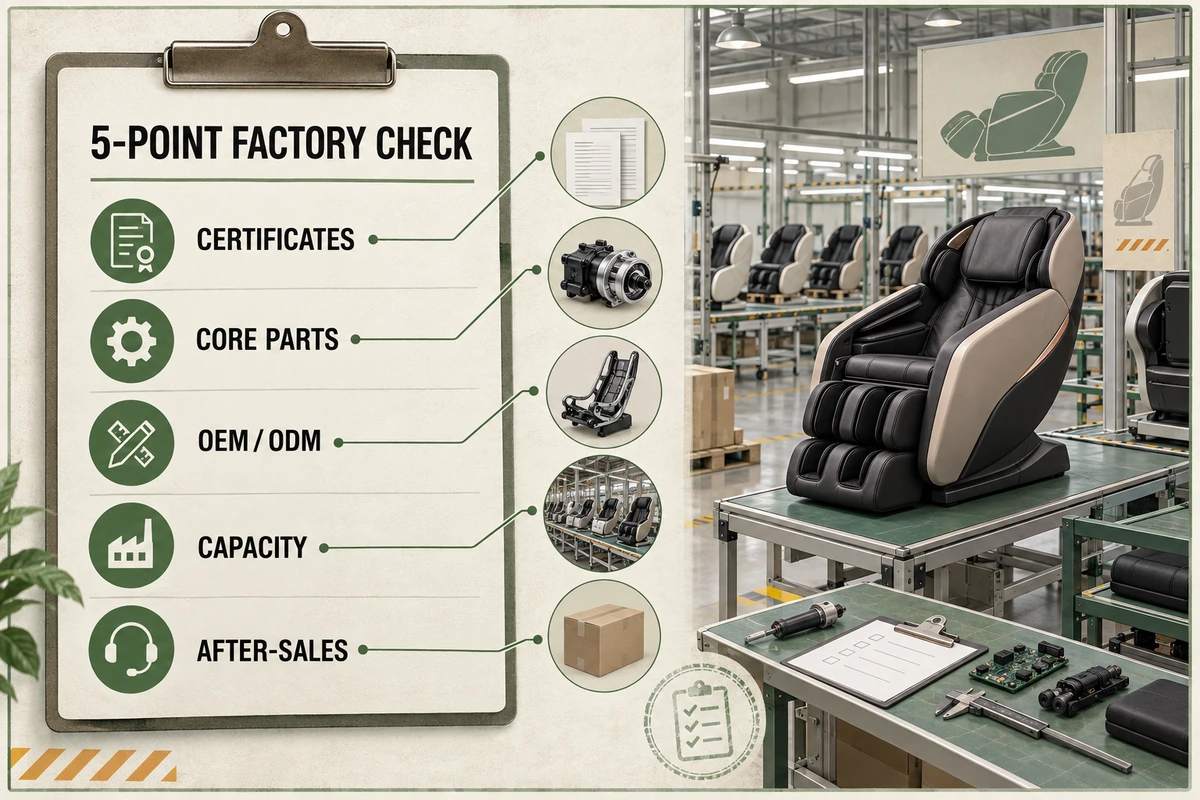
1. Show Me the Certificates! (Or Watch Your Shipment Get Stuck)
If your chairs don’t have the right paperwork, they’re not leaving the port. It’s that simple.
A massage chair is a household electrical appliance, so it sits under the same safety umbrella as any appliance you import: appliance safety test documentation for product safety, compliance marking documentation for EU-bound units, and an quality-system documentation quality system behind consistent production.
For Europe? Ask for the compliance documents required for that market.
- For the USA? Ask for the compliance documents required for the selected model in that market.
- Other markets: do your homework on local requirements for each destination market.
Pro tip: don’t accept a vague “yeah, we have that.” Demand scanned copies of current certificates that match your exact model number.
2. What’s Under the Hood? (The “Concrete Block” Test)
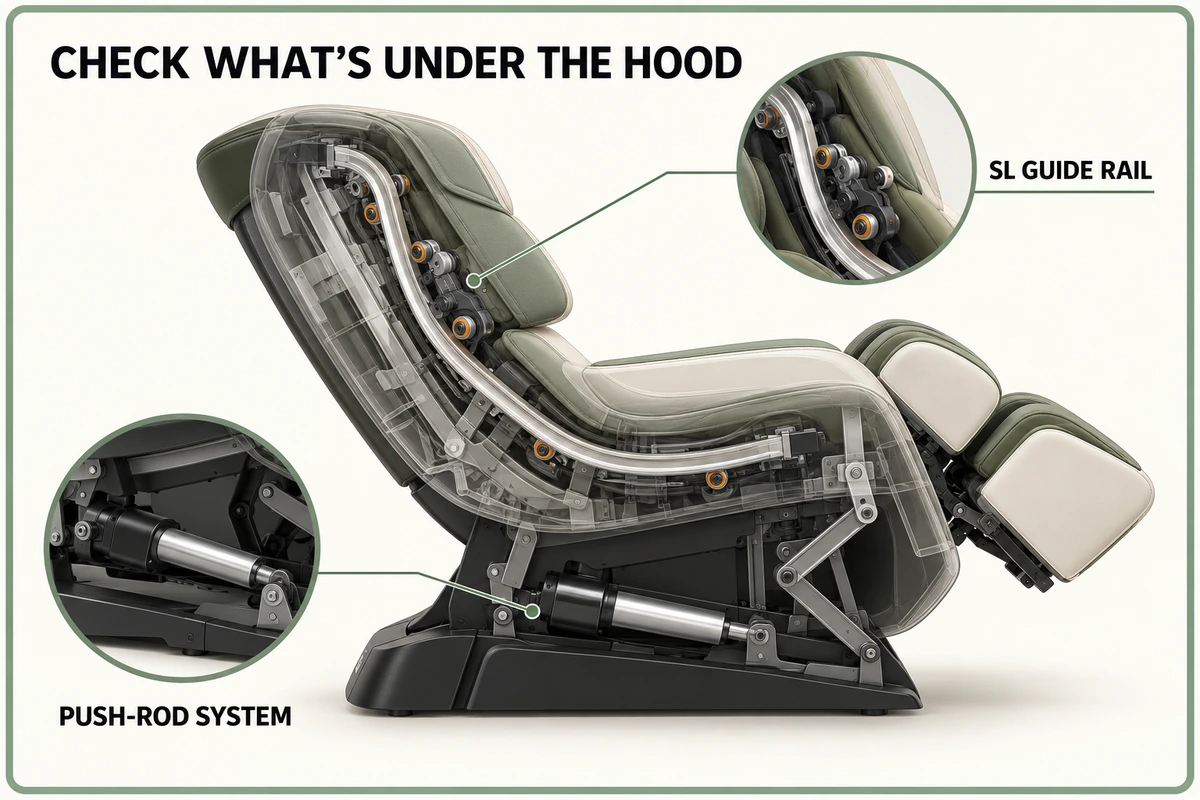
A pretty leather cover means nothing if the guts are junk. Two components are absolute deal-breakers:
- The motor (push-rod system): this is the heart. Does it use a single or dual push-rod? The answer affects strength, stability, and how smoothly the chair reclines. Related: Single vs. Dual Push-Rod Systems.
- The guide rail: this determines how far the massage rollers travel. A short S-rail is old news. A long SL-rail is the gold standard — it actually follows your spine’s curve from neck to glutes. That’s a real massage, not a back-scratch. Related: EP5 Series: SL-Track Advantages.
Smart move: ask for the brand names of these core parts and their lifespan test reports. Any factory that can’t — or won’t — tell you is a red flag.
From our side of the line: across the export orders we handle, the two spec lines buyers most often under-spec are actuator thrust and rail length — cheap to confirm on paper, expensive to fix after a container lands.
3. Can You Help Me Build My Brand? (OEM Is Key)
Selling the same generic “model 123” as everyone else is a race to the bottom. To win, you need a factory that can customize.
- Basic: changing the logo, picking different leather colors, designing unique packaging.
4. Can You Actually Handle My Order? (Don’t Miss Peak Season)
You land a huge order from a major retailer — congrats! But can your factory deliver?
- Ask for numbers: how big is their factory? What’s the annual capacity? (A 70,000 m² facility with a verified annual output figure is serious capacity.)
- Ask about production schedule: about 30 days is typical for most production windows. Can they commit to it in writing, against their current order load?
5. What Happens If It Breaks? (After-Sales & Spare Parts: What to Put on the PO)
A massage chair isn’t a toaster. When it breaks, it’s a headache. A good partner supports you.
- After-sales coverage: what support terms are confirmed in the PO/contract for the whole chair vs. just the core motor?
- Spare parts: will they be available for years to come?
- Support: do they offer video tutorials and remote troubleshooting to help your customers?
Your 6-Step Action Plan for a Perfect Sourcing Trip
Here’s the blueprint. Follow these steps to source like a pro.
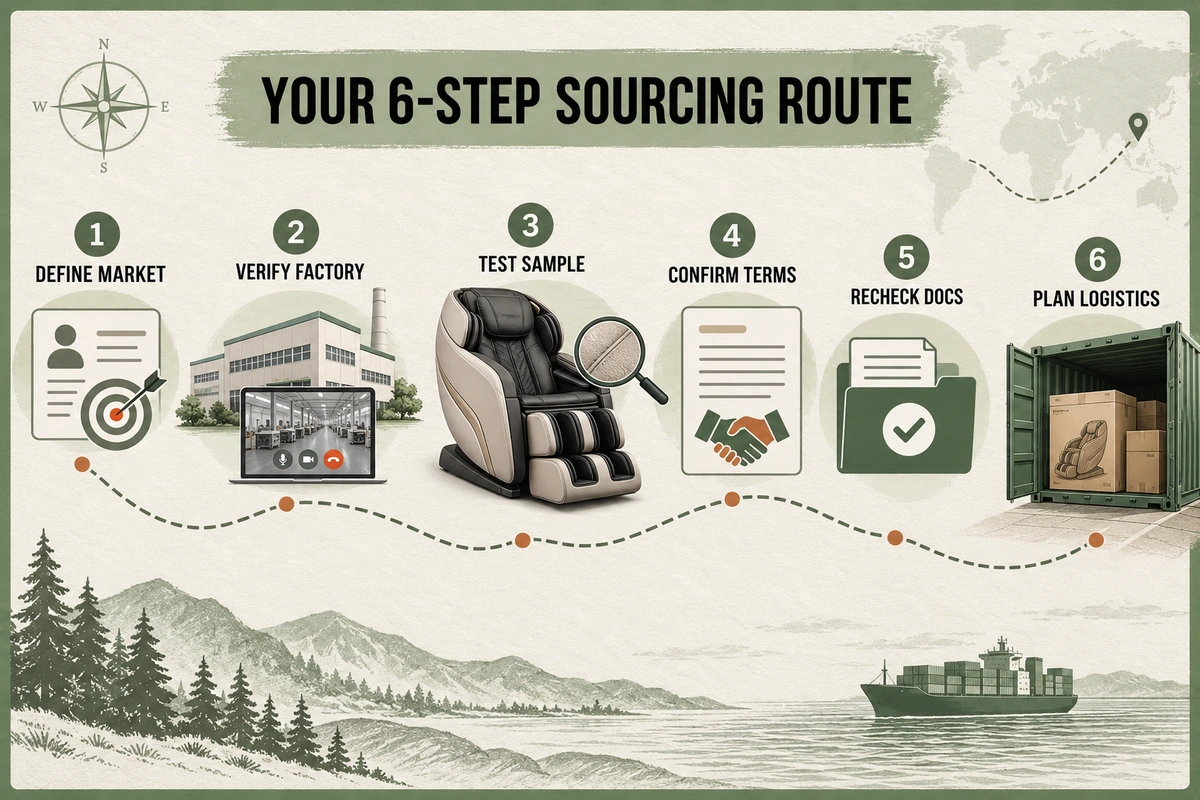
Step 1: Define Your Battlefield
Who’s your end customer — a budget-conscious family, a luxury hotel chain, or a healthcare provider? This decision dictates every other choice about the chair’s price and features.
Step 2: Hunt for Factories, Not Middlemen
Working with a direct manufacturer means better pricing, clearer communication, and total control over customizations. How to spot one? Ask for factory floor photos and video calls. Trading companies often can’t provide this.
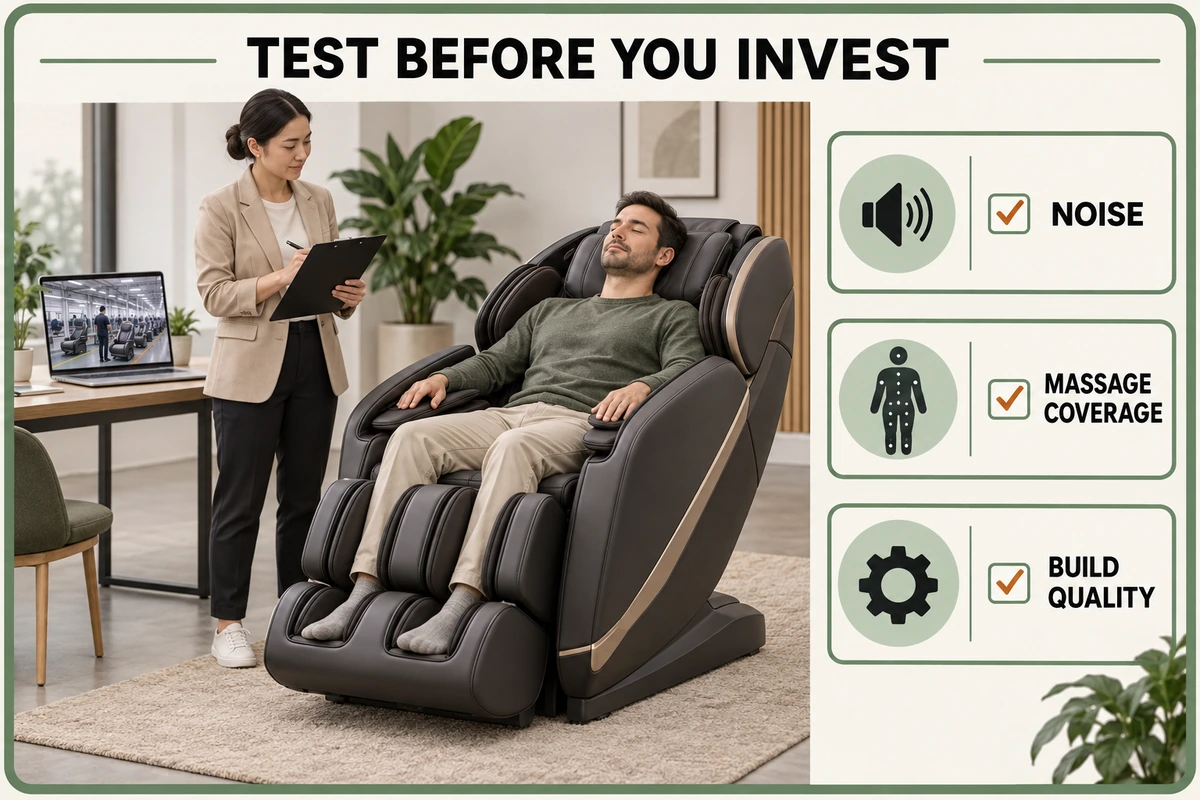
Step 3: The Golden Rule — Test Before You Invest
Never order bulk without sitting in a sample. If a factory pushes back on this, run.
- Video tour: start with a live stream of their production line and quality labs.
- Physical sample: pay for one sample to be shipped to you. Get your team and some trusted customers to test it.
- Is it noisy?
- Does the massage feel good and cover your whole back?
- Does the build quality feel premium?
Step 4: Talk Money (Order Quantity, Quotation Tiers, Payment — inquire for an FOB quote)
Order quantity: confirm a trial quantity on inquiry; do not assume a public minimum.
- Tiers: ask for their pricing at different volume levels.
- Payment: 30% deposit, 70% before shipment is common for first-time partners.
Step 5: Double-Check Compliance Documents … Again
Before you wire the final payment for a bulk order, get the latest, valid certificates for your specific model.
Step 6: Plan the Logistics
- Shipping terms: understand FOB vs. CIF. Who’s responsible for what?
- Container math: know how many units fit per container to calculate your shipping cost. Rule of thumb: a 20ft container fits about 30 chairs, and a 40ft HQ fits about 70.
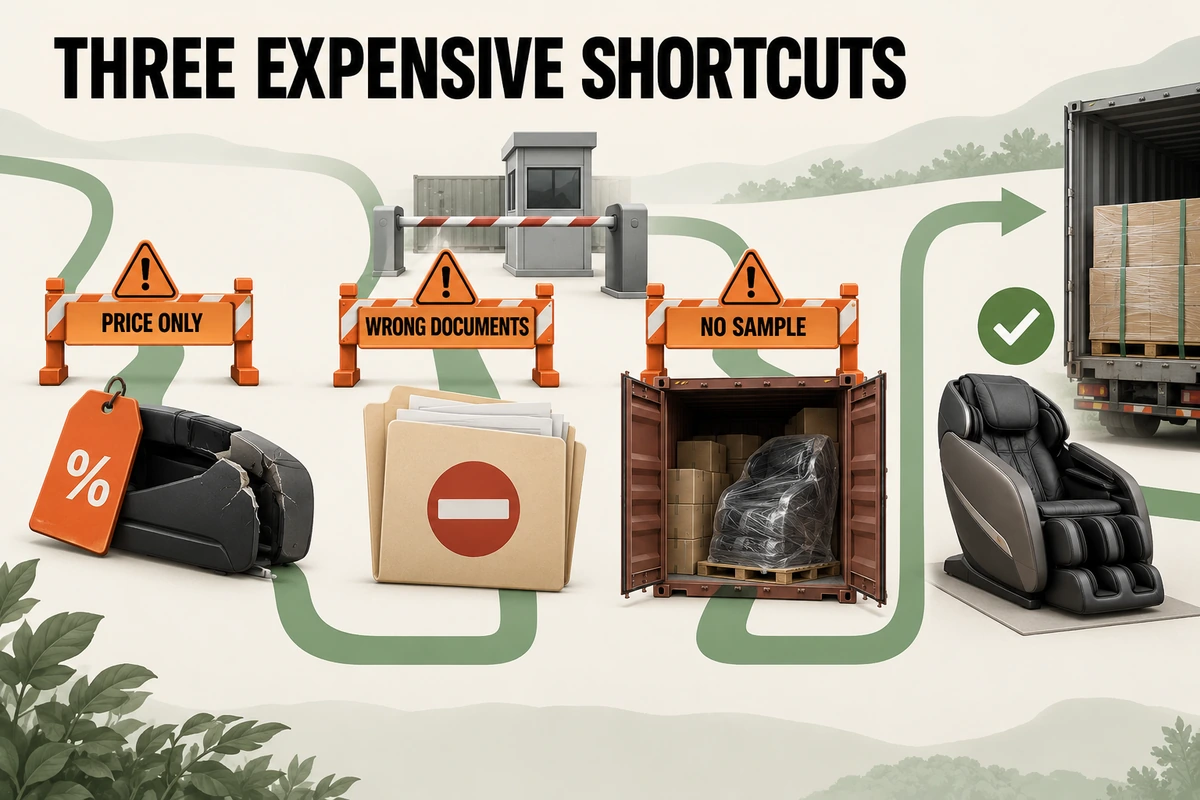
3 Critical Mistakes That Will Sink Your Business
1. Sourcing on Price Alone
This is the #1 killer. Saving a quoted amount on a unit could cost you a quoted amount in after-sales coverage claims and lost reputation when it breaks after two months. Focus on total value — quality, reliability, and service.
2. Gambling on Compliance
Hoping your “almost correct” certification will slide through customs is a high-stakes gamble. If you lose, you’ll pay massive storage fees or even have the entire shipment destroyed.
3. Skipping the Sample Order
This is the most expensive “saving” you will ever try. A sample fee is small next to a full container of unusable chairs.
Why the Right Partner Matters More Than the Right Price
In this game, you don’t just want a factory; you want a partner. An experienced manufacturer brings:
- Real expertise: R&D teams, in-house labs, and patents prove they’re innovating, not just copying.
- Peace of mind: a robust quality management system (like quality-system documentation) means consistent quality.
- Strategic support: they help you choose the right products for your market, not just push whatever they have in stock.
At Sweet Home, we’re not just a supplier. We’re a team of industry veterans with deep R&D capabilities, full certifications, and a track record of helping global distributors build successful brands.
We offer flexible MOQs and transparent communication because your success is our success.
Your Burning Questions (FAQ)
Q: What’s the typical order quantity for zero-gravity chairs in bulk programmes?
It depends. A trial order to test the waters can be just 20 units. For a customized order (your logo, colors, etc.), you’re usually looking at a full container, which is about 30–70 units depending on the model.
Q: How long does the whole OEM process take?
From your final design sign-off to the finished product? Sampling takes about 14–21 days. Once you approve the sample, mass production is typically about 30 days.
Q: Can you really get these chairs certified for Europe and the USA?
Absolutely. A reputable manufacturer should provide the compliance documents required for your target market on request.
Q: What’s the real benefit of buying from a factory versus a trading company?
It comes down to control and cost. You get a better price without a middleman mark-up, direct technical support, and much more flexibility to customize the product to your exact needs.
Ready to Get Started?
Sourcing massage chairs is a journey, not a transaction. But with the right knowledge and the right partner, it can be an incredibly rewarding one.
Let’s talk. Tell us about your market, your vision, and your goals. We’ll help you find the perfect chair solution and create a sourcing plan that fits your business.
This guide is part of our ongoing series for B2B partners. For more technical deep-dives, check out our articles on the EP5 Guide Rail Series, the EP10.0 Zero Gravity Mechanism, and Single vs. Dual Push-Rod Systems.
Tommy
Sweet Home Technical Team
Part of Sweet Home’s in-house technical team. Tommy writes our How-To guides for importers and distributors — factory checklists, sourcing steps, and order-time pitfalls — built on our export order data and after-sales records.
Disclosure: Sweet Home is the manufacturer behind the chairs discussed in this guide, and the sourcing and after-sales patterns come from our own orders and repair records — shared so buyers can evaluate factories before booking a container.
Quick audit: is your sourcing shortlist factory-grade?
1. Current certificates for your exact model? 2. Push-rod motor and SL-rail brands named? 3. Sample or live video tour arranged?
Two or more unchecked? Send us your shortlist and get a first-hand audit reply.