
A massage sofa can look perfect in a showroom and still fail a hotel project before anyone sits down. Sometimes the problem is not the massage function at all.
It is the elevator door, the cleaning chemical, the control panel, or a color that looked warm beige on a screen and turned pink under the lobby lights.
Hospitality buyers are not simply choosing a chair. They are coordinating furniture, interiors, guest operations, housekeeping, safety requirements, delivery access, and after-sales service. That changes the meaning of OEM customization.
The useful question is not “How many features can we add?” It is “What must this product do in this property, for these guests, and for the staff who maintain it?”
1. Material customization starts with housekeeping
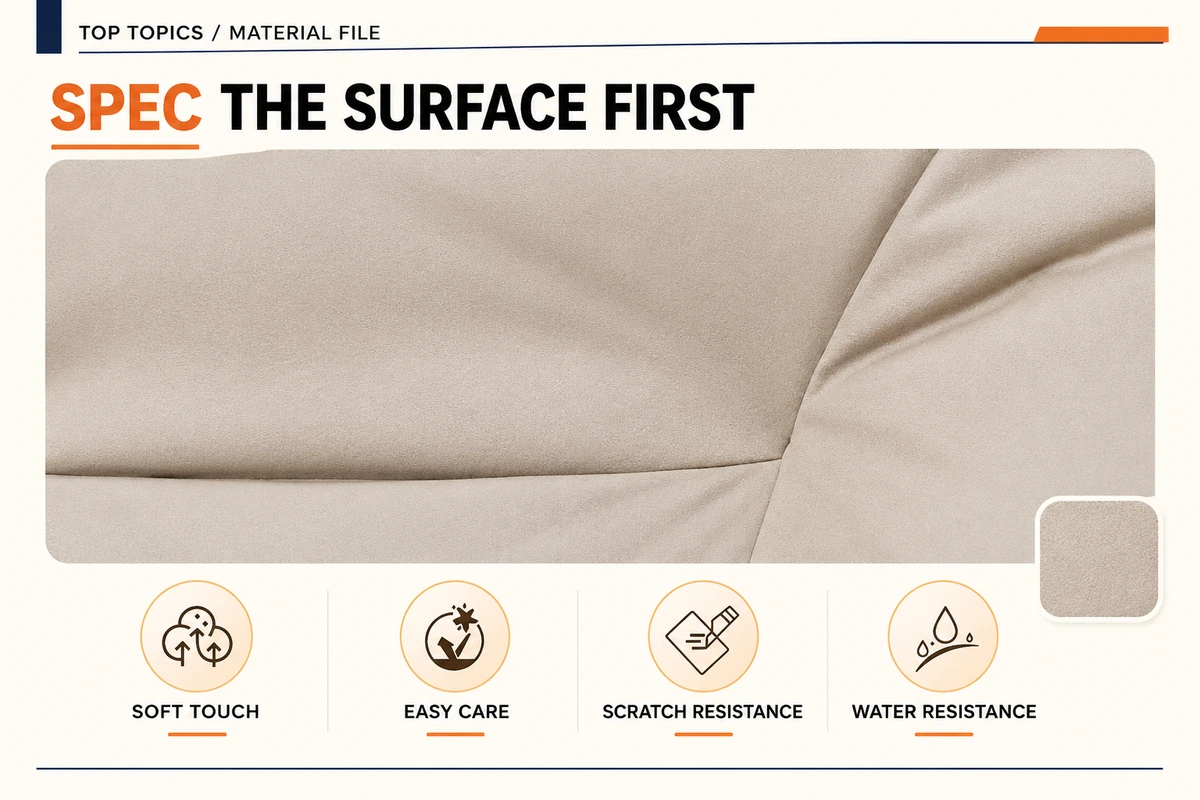
Color and texture matter, but hotel and spa upholstery also has to survive repeated contact, cleaning, and different operating environments. A dry guest room, a humid wellness area, and a public lounge do not place the same demands on a surface.
Before selecting upholstery, the buyer and manufacturer should agree on:
- The property’s cleaning method and the products used by housekeeping.
- The expected traffic level and the parts most likely to receive wear.
- Local fire, chemical, labeling, or material documentation required for the project.
- Color references under the actual interior lighting, not only on a monitor.
- Stitching, piping, texture, gloss level, and acceptable production tolerances.
A physical material board is far more useful than a row of color names in a spreadsheet. It gives the designer, purchasing team, and factory one object to approve and helps prevent an expensive argument after production.
2. Function configuration should reduce friction
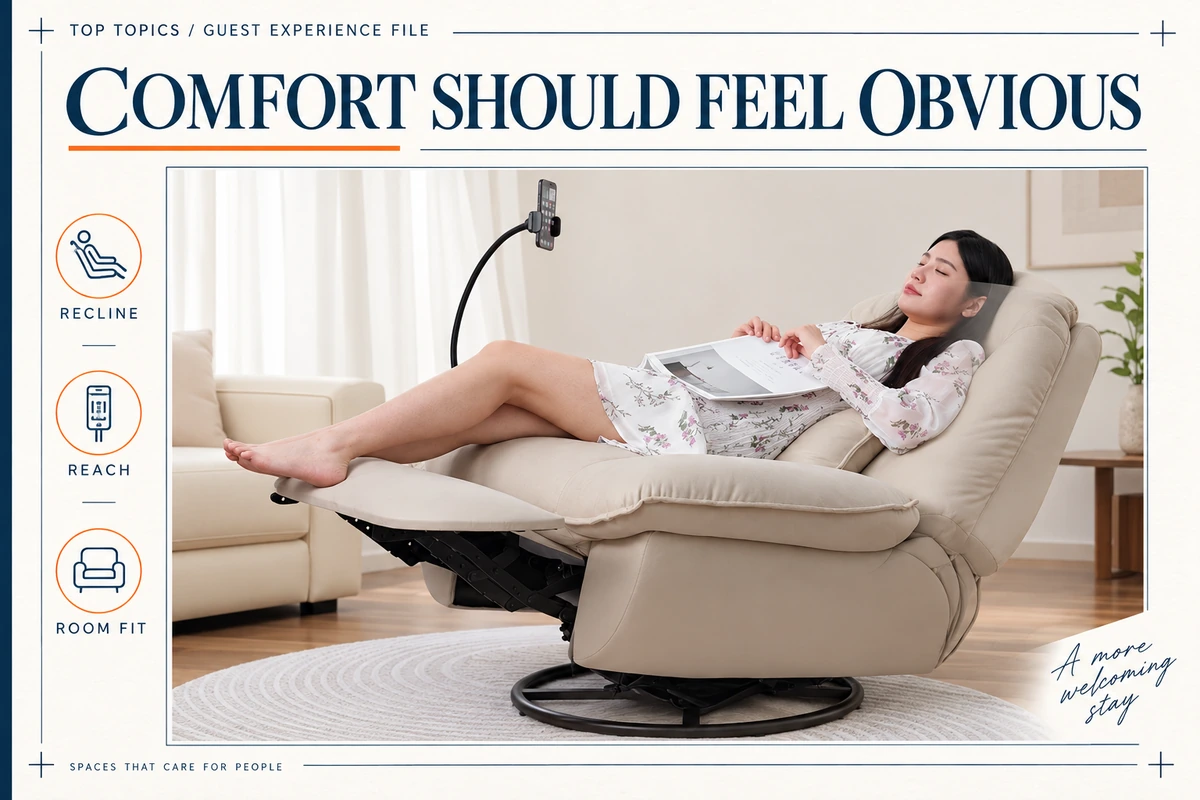
Residential products often compete through longer feature lists. Hospitality products have a different job. A first-time guest should be able to use the main functions without searching for a manual, while staff should not need a training session every time the room changes hands.
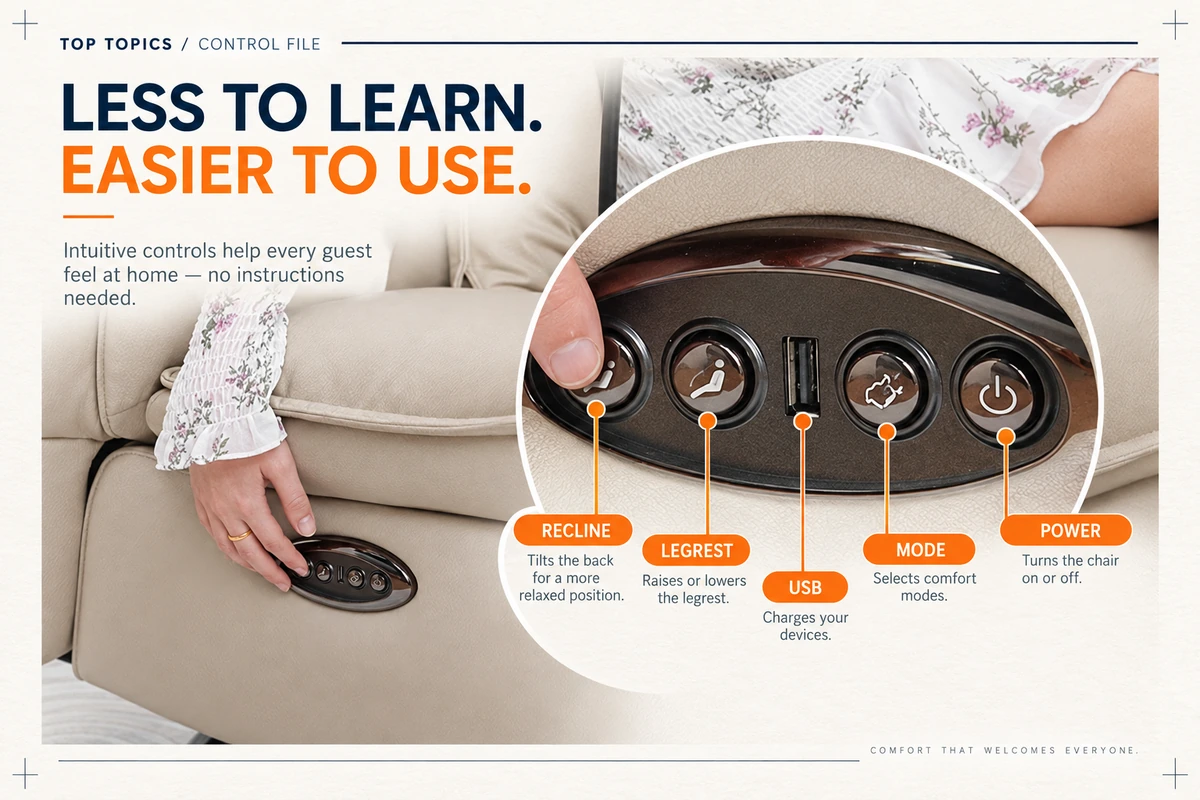
Start with the guest experience the property wants to provide. That may mean powered recline, an adjustable legrest, a small number of clear comfort modes, or convenient device charging. Every added function should earn its place by improving comfort or simplifying the stay.
The control layout deserves the same attention as the mechanism. Confirm button order, icon clarity, language, cable routing, placement, and whether the controls remain easy to reach when the user is reclined.
Also ask how the product behaves after a power interruption and which parts can be replaced without removing the whole sofa from the room.
3. Measure the route, not only the room
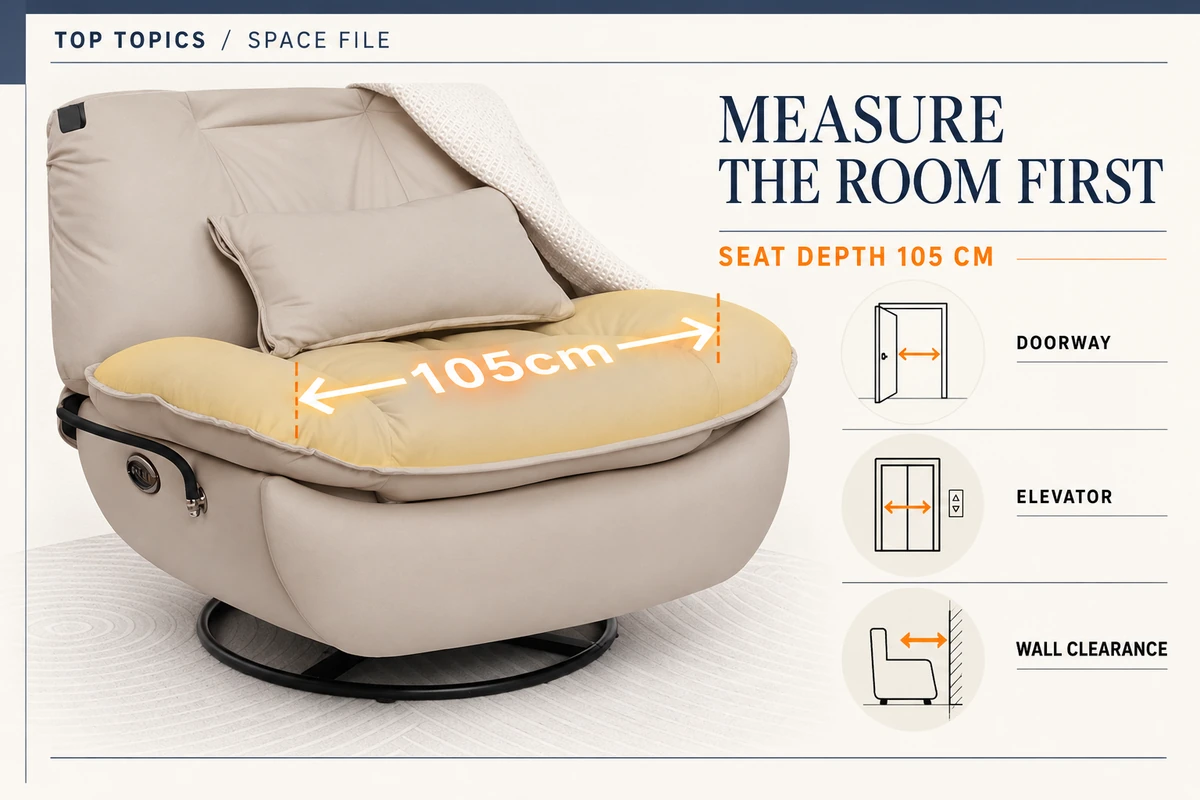
A floor plan can say the sofa fits while the building says otherwise. The delivery route may include a loading dock, service corridor, elevator, guest-room doorway, tight corner, and finished flooring that cannot be damaged.
The dimension audit should record the packaged size as well as the assembled size. Confirm the footprint in the upright and reclined positions, the space required for swivel or moving sections, access to power, and clearance for cleaning and maintenance.
Seat dimensions should also reflect the intended guest profile and the type of use. If an extended seat option is being considered, evaluate it with a physical sample rather than relying on one dimension alone.
Width, cushion support, legrest travel, recline geometry, and the user’s reach to the controls work together.
4. A practical hospitality OEM process
A reliable OEM project moves through clear approvals. The exact timeline depends on customization, testing, quantity, and shipping route, so the schedule should be agreed for the actual order rather than copied from a generic sales promise.
- Brief: define the property type, quantity, target market, installation rooms, material direction, functions, compliance documents, delivery date, and commercial terms.
- Specification: turn the brief into a controlled specification covering dimensions, upholstery, colors, controls, labels, packaging, and acceptance criteria.
- Sample: build and review a pre-production sample using the intended materials and configuration. Record every approved change.
- Validation: confirm function, appearance, packaging, cleaning compatibility, documentation, and any agreed model-specific tests.
- Production: use an approved reference sample, defined checkpoints, traceable records, and change control.
The key document is the approved specification. If a decision exists only in a chat message, it is too easy for purchasing, engineering, production, and the hotel team to interpret it differently.
5. Ask for evidence behind durability claims
Large numbers can look reassuring, but a buyer needs to know what was tested, under which conditions, and whether the result applies to the exact model being quoted. A load figure, motor-life claim, upholstery result, or field-failure rate is meaningful only when its method and scope are clear.
For a hospitality project, ask the supplier for model-specific evidence relevant to the order: frame and moving-part checks, motor and electrical protection, upholstery documentation, production inspection records, packaging validation, spare-parts availability, and a clear failure-response route.
If the configuration changes, confirm which evidence still applies.
Serviceability matters just as much as the initial specification. A chair that is easy to inspect and repair can often return to service quickly. A chair designed only for the showroom may turn a small component issue into a room-level disruption.
A clearer RFQ gets a more useful quotation
Include these details when requesting a hospitality massage sofa quotation:
- Hotel, resort, spa, villa, or lounge application and installation country.
- Quantity, sample requirement, target delivery window, and project milestones.
- Room plan, delivery-route dimensions, power supply, and available clearances.
- Guest profile, required functions, control preferences, and language needs.
- Material, color, cleaning, labeling, and compliance requirements.
Customization should remove surprises
The strongest hospitality OEM projects are not the ones with the longest option list. They are the ones in which the product, room, guest experience, cleaning routine, delivery route, and service plan have been considered together.
Sweet Home works with hospitality buyers, distributors, brands, and OEM partners on massage sofa projects. To discuss a project, contact us with your quantity, target market, room or venue type, preferred materials, required functions, and delivery schedule.
You can also review the massage sofa collection and full-body massage chairs.
Joe Fan
Manufacturing & Product Development Manager · Sweet Home
Sweet Home has manufactured massage chairs since 2013, drawing on in-house R&D and quality control for massage chairs and wellness equipment. Joe leads the product and market strategy behind Sweet Home’s OEM export business — the hospitality orders, showroom feedback and after-sales records behind our buyer guides.
Disclosure: Sweet Home is the manufacturer behind the massage sofas and configurations discussed here, and the project patterns in this guide come from our own export orders and hospitality buyer conversations — shared so buyers can run a clearer specification before committing to a hotel or spa order.
Quick audit: is your hospitality spec ready to send?
1. Confirmed cleaning chemicals, traffic level and documentation with housekeeping and compliance? 2. Mapped the full route — doorway, elevator, corridor and installed recline space? 3. Asked for model-specific evidence behind every durability claim?
Two or more unchecked? Send us your quantity, room type and target market.
Related product pages