
A vending massage chair can collect payments without a staff member standing beside it. That does not make the business automatic. The chair still needs the right location, payment setup, service plan, and operating numbers.
The phrase passive income makes the opportunity sound almost too comfortable: install a chair, watch people sit down, and collect the revenue. In practice, the chair is the visible part of a small operating system. The system earns only when people notice it, understand it, can pay for it, and find it available.
For distributors, venue operators, and fleet owners, the better question is not “How much can one chair make?” It is “What must be true for this chair to produce a repeatable contribution?”
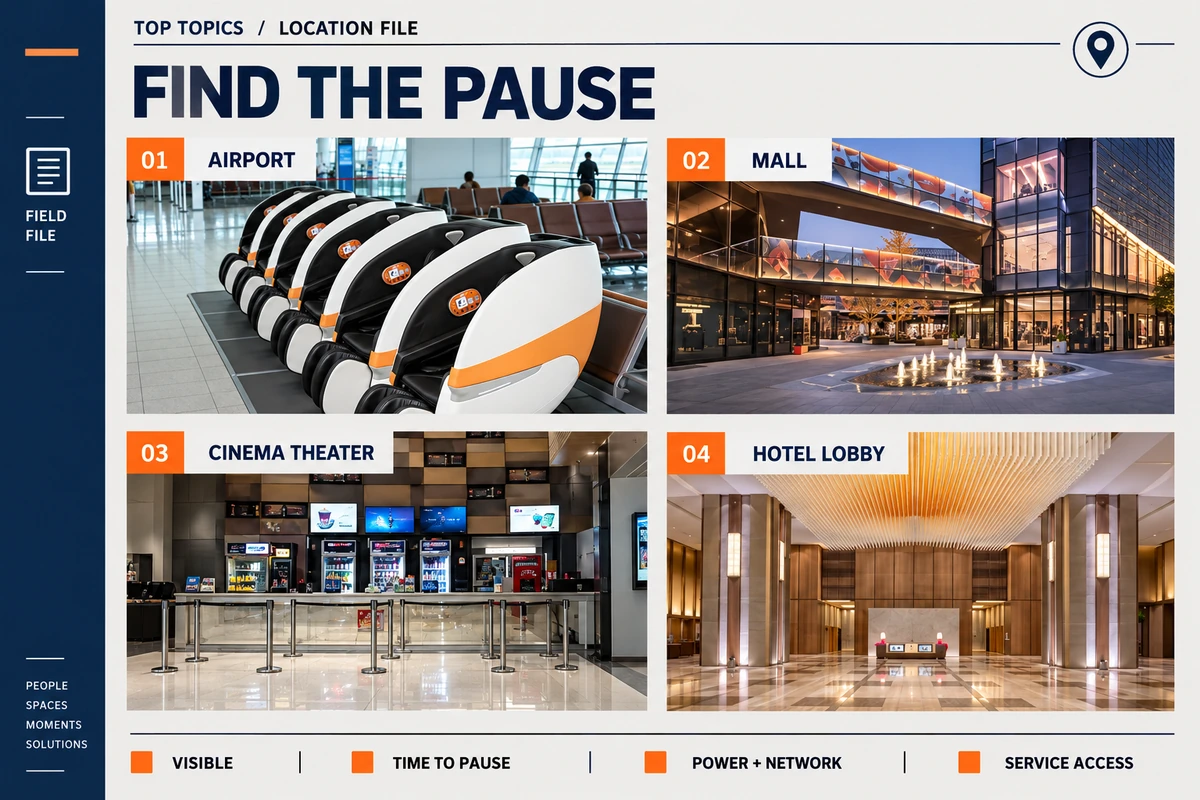
1. Start with the pause—not just the crowd
A busy corridor may look attractive, but foot traffic alone does not create sessions. People also need a reason and enough time to stop.
A cinema waiting area, airport departure zone, hotel lobby, shopping mall rest area, or wellness club may all work differently because the customer’s mood and available time are different.
Walk the proposed site and check four things:
- Visibility: Can a person understand the offer before walking past?
- Time to pause: Are people waiting, resting, or simply moving through?
- Utilities: Is there safe power and, where required, stable network access?
- Service access: Can staff clean, inspect, empty, or repair the unit without blocking the venue?
2. Build the model from paid sessions
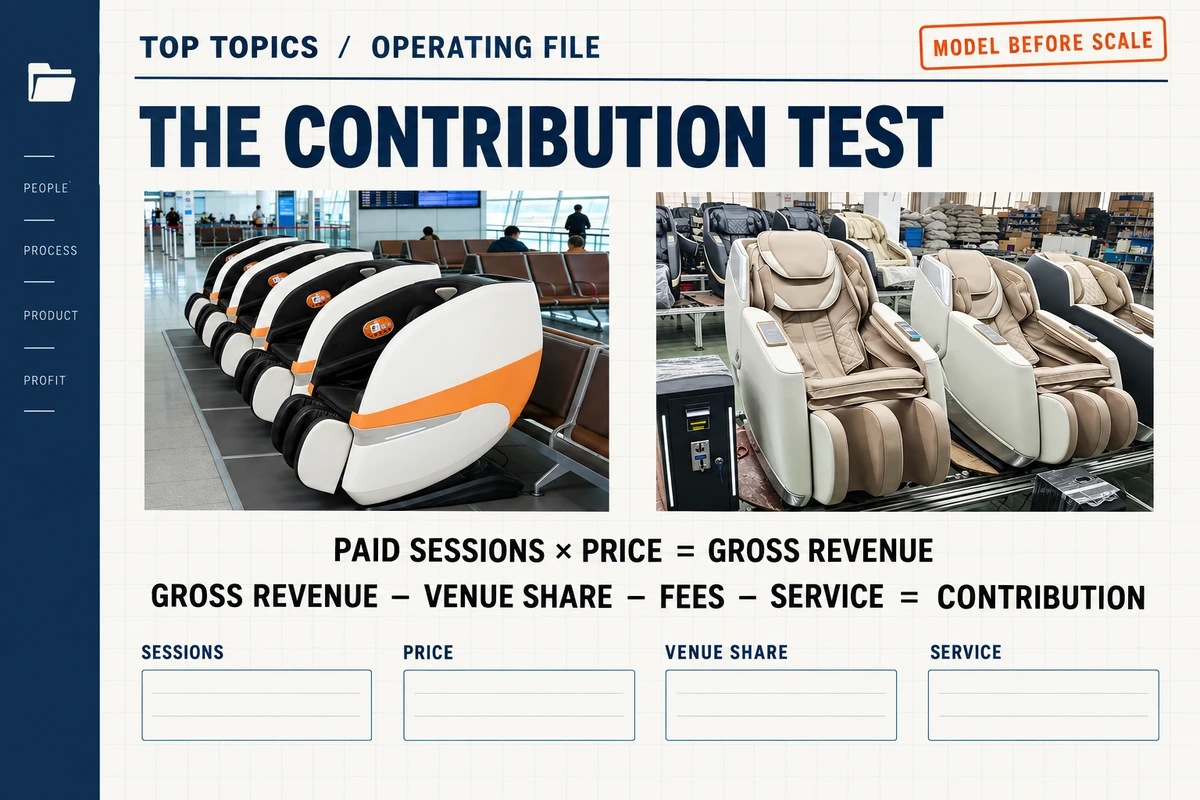
Revenue forecasts become unreliable when they begin with a promised monthly income. Start with variables you can observe during a pilot:
Paid sessions × price per session = gross revenue
Then subtract the costs that belong to that location:
Gross revenue − venue share − payment fees − cleaning and service costs = operating contribution
This simple structure makes comparison easier. One venue may deliver more sessions but demand a larger revenue share. Another may have lower traffic but longer dwell time and fewer service visits. The attractive site is the one with the better complete equation, not necessarily the bigger crowd.
3. Match payment methods to local habits
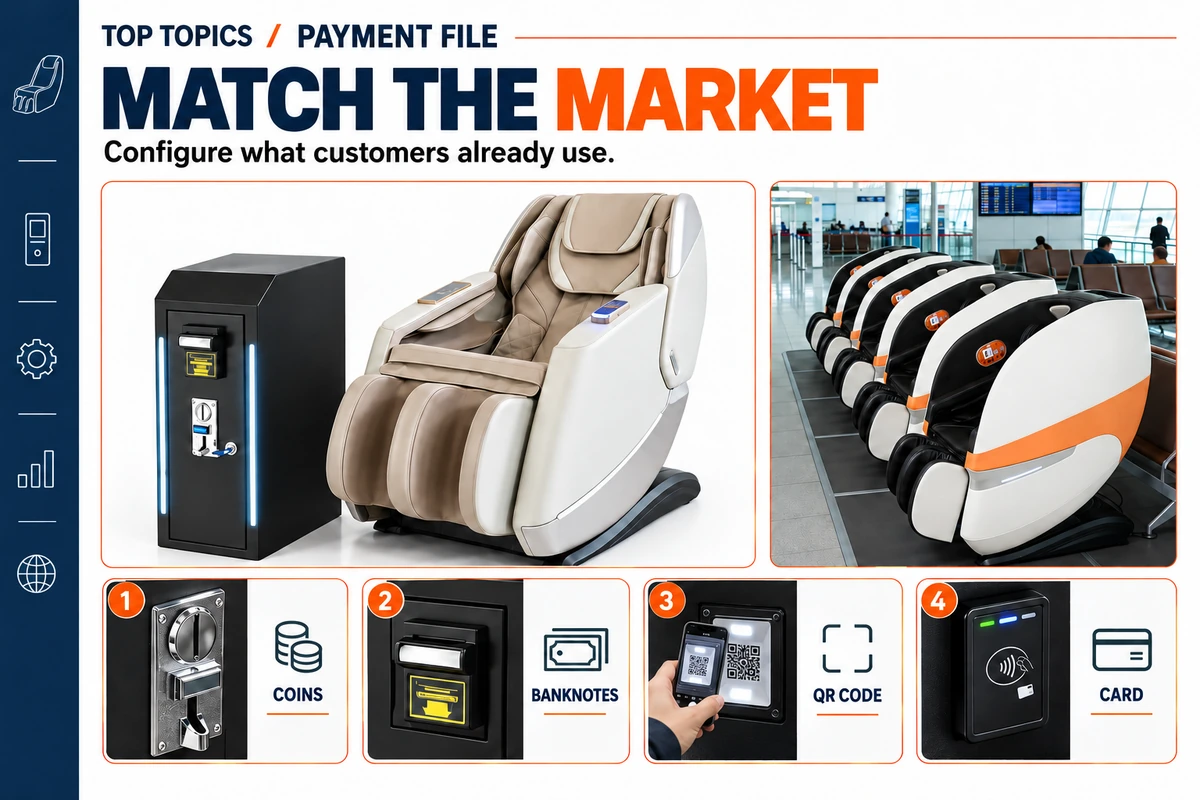
A payment method is useful only when customers recognize and trust it. Coins and banknotes may still matter in some venues. In other markets, QR code payments or contactless cards reduce friction.
The correct configuration depends on the country, venue, price point, settlement process, and the operator’s ability to reconcile transactions.
Before ordering, confirm:
- Which payment hardware is physically included and which integrations are optional.
- Who provides the merchant account, SIM card, gateway, or QR platform.
- How a successful payment starts the selected massage session.
- What happens after a failed payment, network interruption, refund request, or power loss.
- How cash collection, digital settlement, and transaction records are reconciled.
4. Uptime matters more than a long feature list
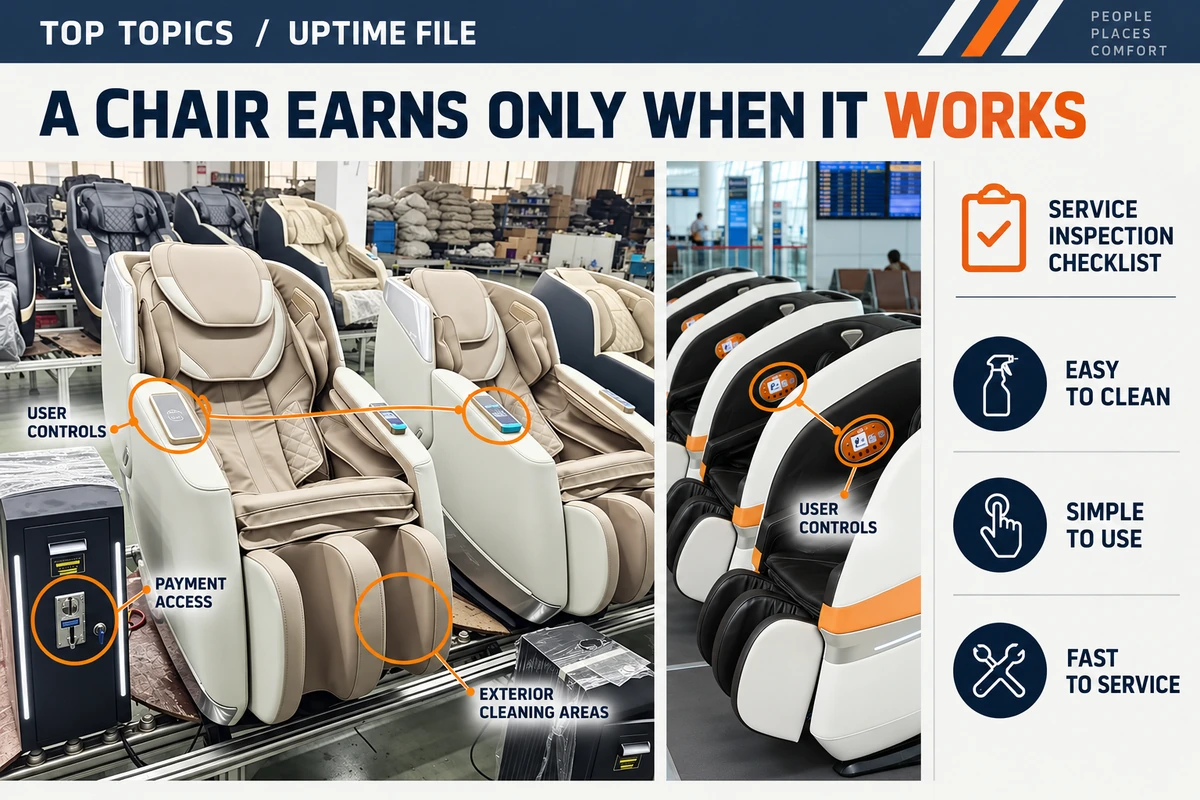
A public-use chair has a different job from a home massage chair. Many users will meet it for the first time, so the offer and control steps must be obvious. The surfaces must be practical to clean. Service staff need a sensible way to inspect the chair and payment cabinet.
Ask the supplier to explain routine cleaning, access to service parts, fault identification, controller replacement, payment-module support, and recommended spare parts. Also define who handles the first response when the chair is unavailable. A premium feature cannot earn anything during downtime.
5. Remote management should produce useful actions
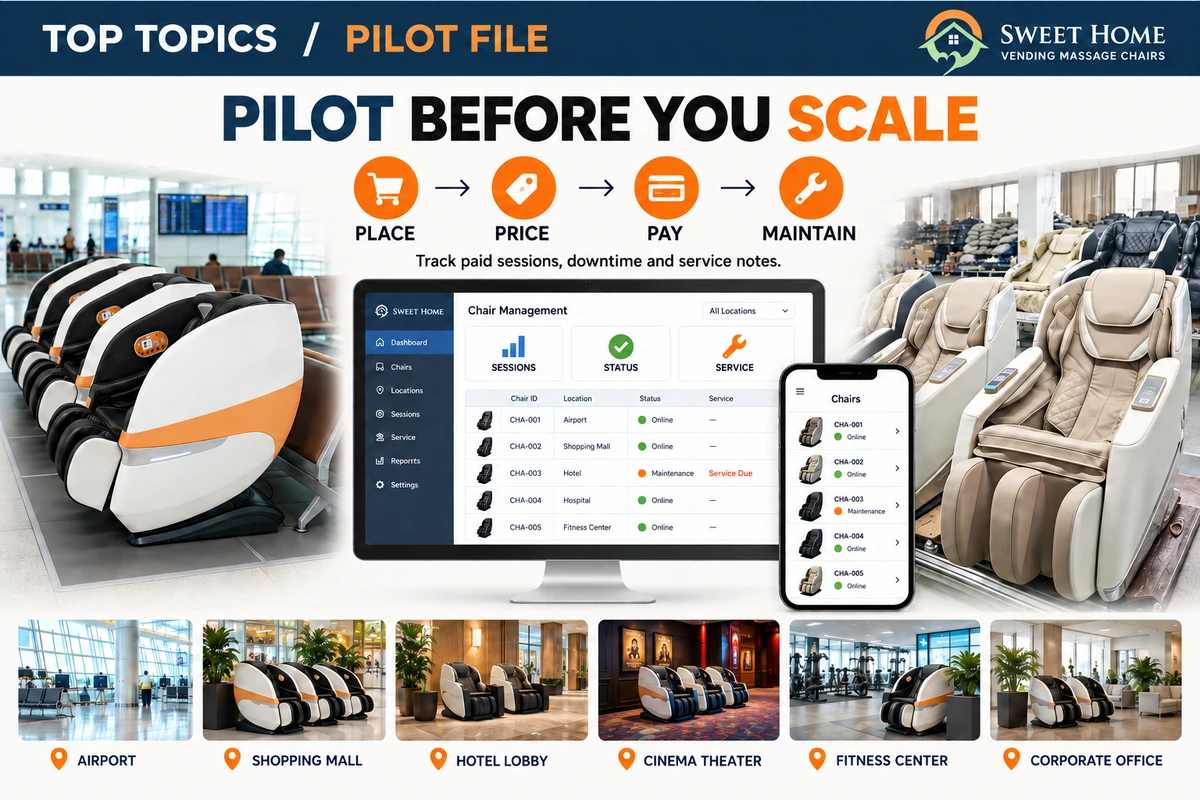
A dashboard is valuable when it helps an operator answer practical questions: Did the chair receive payment? Did the session start? How many paid sessions were recorded? Has the unit been offline? Which service note is still open?
Capabilities vary by payment platform and control system, so request a live demonstration using the intended market configuration. Confirm what data is available, how often it updates, who owns access, and whether the system can export the records your finance and service teams need.
6. Pilot before you scale
Begin with a controlled pilot rather than deploying a large fleet based on a presentation. Record paid sessions by day and time, payment success, downtime, cleaning frequency, service events, and venue feedback.
Test one change at a time—placement, message, price, session length, or payment method—so the result is interpretable.
A buyer checklist for the quotation stage
- Chair and payment-cabinet dimensions, weight, power requirements, and installation layout.
- Supported payment methods and responsibilities for local integration.
- Session settings, language options, and customer instructions.
- Remote-management functions demonstrated on the proposed configuration.
- Packaging, delivery access, venue approvals, and pilot acceptance criteria.
Frequently asked questions
Is a vending massage chair truly passive income?
It can reduce the need for on-site sales staff, but it still requires location management, payment reconciliation, cleaning, monitoring, and maintenance. “Low-touch” is usually more accurate than “hands-off.”
Which payment method should a vending massage chair support?
Choose according to local customer habits and the operator’s settlement capabilities. A multi-method configuration may improve access, but every added method also needs compatible hardware, integration, support, and reconciliation.
What should be measured during a pilot?
Track paid sessions, payment success, downtime, service events, cleaning workload, venue feedback, and the full contribution after venue and operating costs.
The chair is only one part of the business
A vending massage chair becomes a scalable B2B product when the venue, payment system, hardware, service process, and operating numbers work together. Sweet Home supports distributors, venue operators, brands, and OEM projects with commercial massage chair configurations.
To discuss a project, contact us with your target market, venue type, payment requirements, and pilot plan.
Joe Fan
Manufacturing & Product Development Manager · Sweet Home
Sweet Home has manufactured massage chairs since 2013, drawing on in-house R&D and quality control for massage chairs and wellness equipment. Joe leads the product and market strategy behind Sweet Home’s OEM export business — the orders, showroom feedback and after-sales records behind our distributor guides.
Disclosure: Sweet Home is the manufacturer behind the commercial massage chairs and payment configurations discussed here, and the operating patterns in this guide come from our own export orders, pilot data and distributor conversations — shared so buyers can model a vending deployment before committing to a fleet.
Quick audit: is your vending model ready for a pilot?
Two or more unchecked? Send us your target venue, payment requirements and pilot plan.
Related product pages
Cashless Payment Vending Massage ChairOEM Commercial Vending Massage Chair