
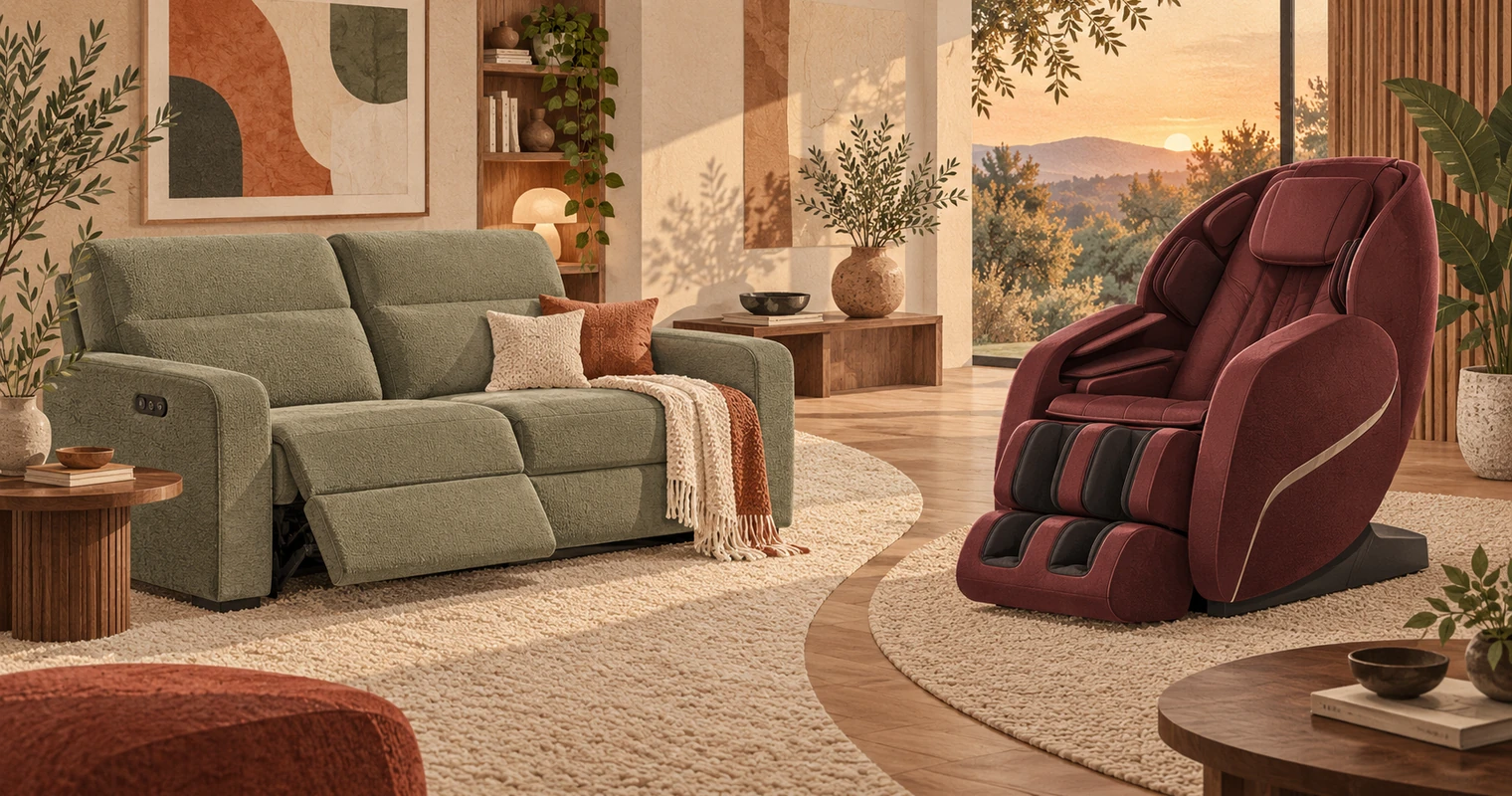
Quick answer: choose a massage sofa when the seat must behave like furniture every day. Choose a massage chair when the massage session is the main event.
A showroom can make almost any seat look irresistible. The more revealing test happens on an ordinary Tuesday night.
Will this be the place where someone reads, watches television, talks with family, and occasionally switches on a gentle massage? Or will it be a dedicated retreat where the user expects the rollers, airbags, recline, and foot section to work together?
That is the real difference between a massage sofa and a massage chair. One starts with everyday seating and adds massage. The other starts with massage and builds a seat around it.
The 30-Second Difference
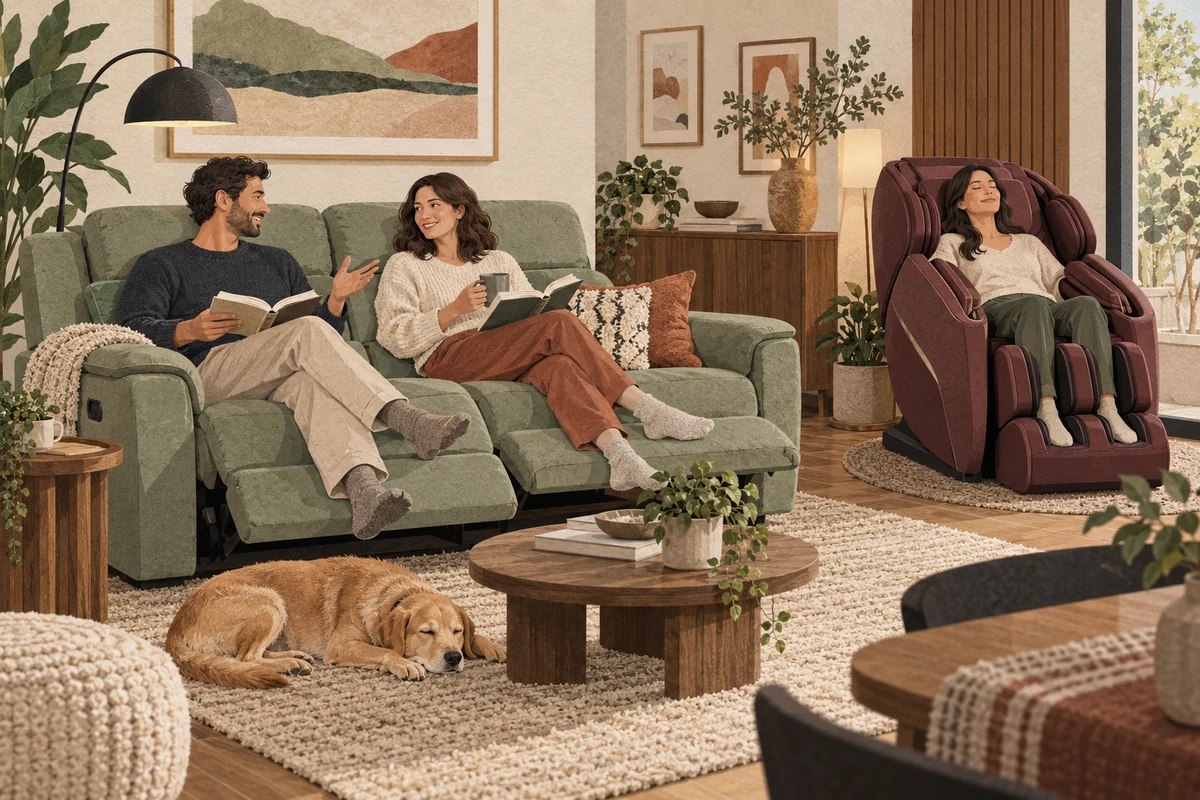
A massage sofa is furniture-first. Its shape, upholstery, seat comfort, and fit with the room do most of the selling. Massage is an extra benefit for the back, waist, or seat area, depending on the model.
A full-body massage chair is massage-first. Its structure is designed around a moving mechanism, programmed massage paths, recline positions, and, on many models, air compression and calf or foot functions.
Neither idea is automatically better. A Swiss Army knife is not a better dinner knife; it simply has a different job.
Inside our factory the two lines start from different questions: the sofa team asks how the piece sits in a room, the chair team asks how the mechanism moves a body. Buyers who choose by that same logic rarely regret the decision.
Start With the Room, Not the Feature List
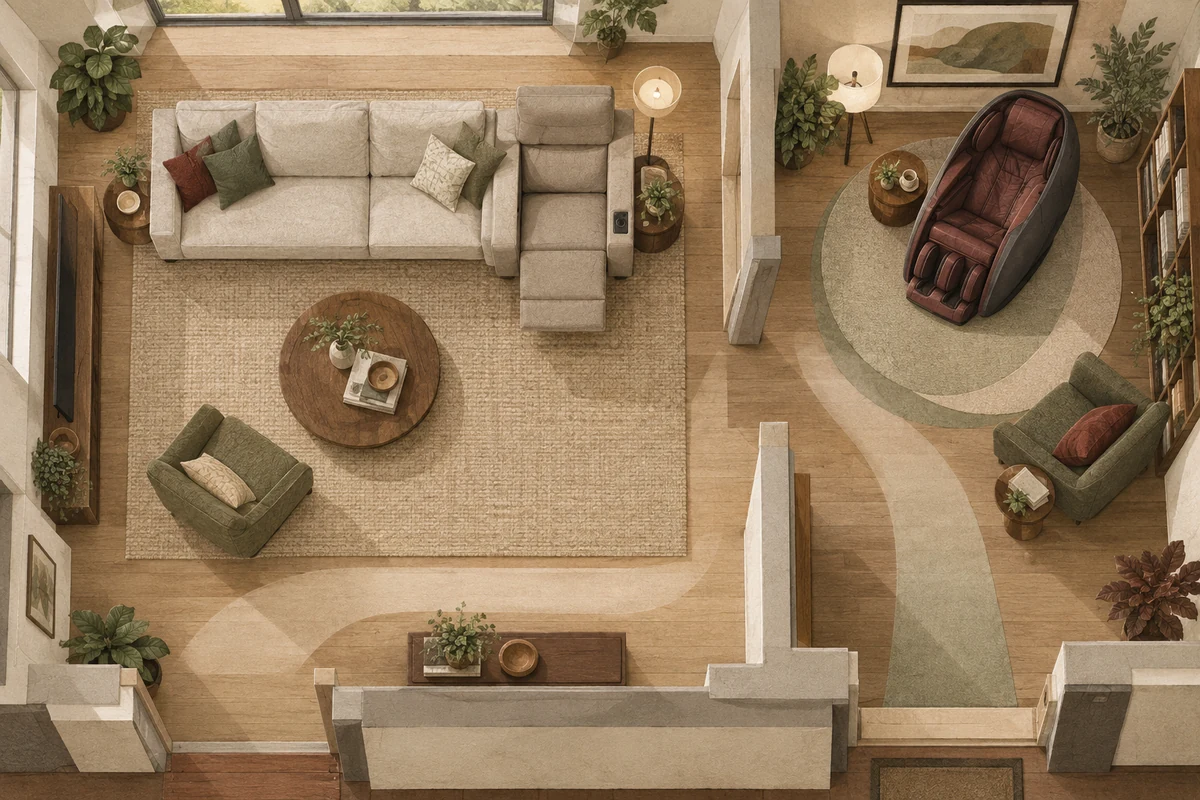
Before comparing programs or roller types, look at where the product will live.
A shared living room
In a room used by the whole family, a massage sofa can feel more natural. It looks familiar, works as normal seating, and does not ask the room to revolve around a wellness device.
A personal relaxation corner
If one user wants a clear start-and-finish ritual, a quiet session after work, for example, a massage chair makes that purpose obvious. The chair is not pretending to be ordinary furniture, and that can be part of its appeal.
A hotel room, lounge, or office
Here, appearance and ease of explanation matter. A sofa-style product can blend into the interior and remain useful when the massage is off. A dedicated chair can create a stronger experience, but it also needs the right placement, operating clearance, and instructions.
Always compare the actual open and reclined dimensions. Product names do not tell you how much floor area a particular model needs.
What Kind of Experience Does the User Expect?
The word massage covers a surprisingly wide range of experiences. That is where many comparisons go wrong.
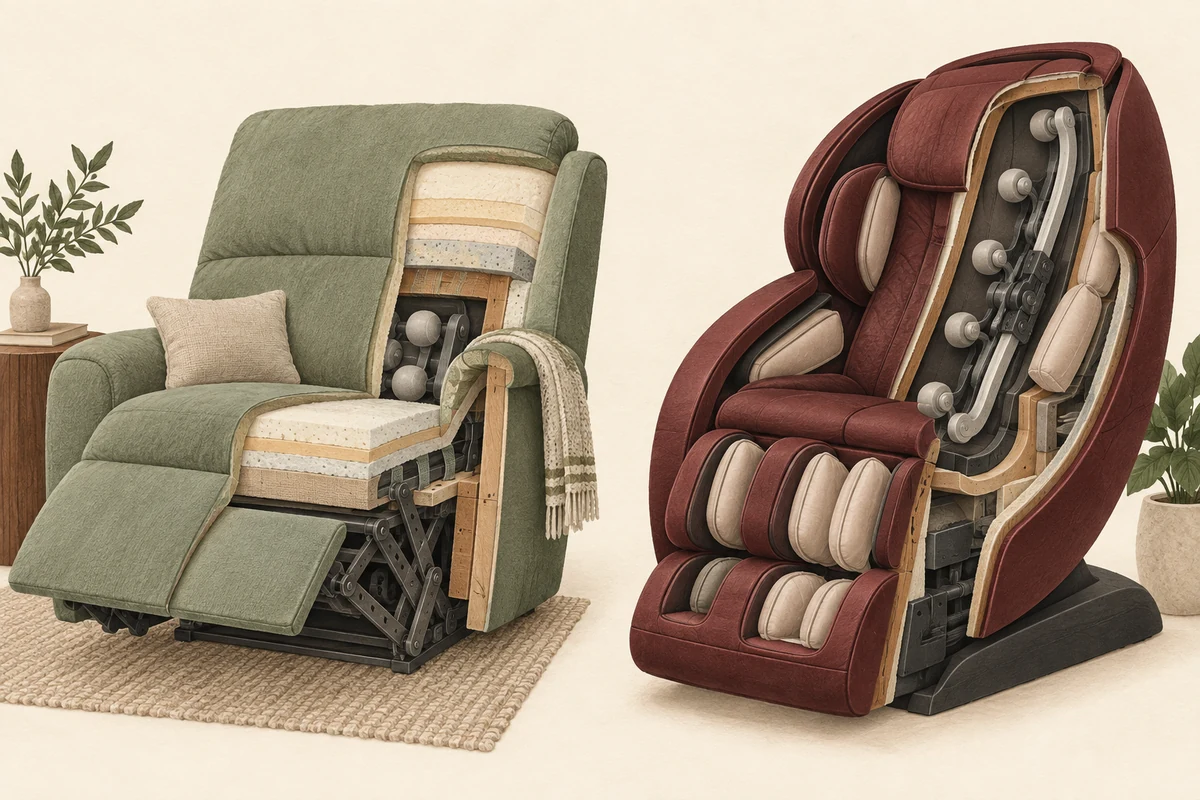
A massage sofa may use vibration, fixed massage heads, focused kneading, heat, or a combination of simple functions. The exact system varies by model. The appeal is easy, low-effort comfort: sit normally, press a button, and add relaxation to something you were already doing.
A massage chair commonly uses a mechanism that travels along a rail behind the back. Depending on the configuration, it may adjust massage position or intensity, recline the user, inflate airbags around selected body areas, and add calf or foot massage.
The user is buying a guided session rather than a small bonus inside a familiar seat.
This distinction also changes expectations. If the product looks like a full massage chair, buyers may expect broad coverage and obvious mechanical movement. If it looks like living-room furniture, they may care more about seat comfort, upholstery, noise, and whether everyone can use it normally.
Five Questions That Make the Choice Easier
- What will the seat do for most of the day? If the answer is ordinary sitting, the sofa concept has a natural advantage. If the answer is structured massage sessions, start with a chair.
- Who will use it? A shared seat must satisfy different body sizes and sitting preferences. A dedicated chair can be selected more closely around its primary user, but fit still needs to be checked.
- How much massage coverage is actually wanted? Some buyers want a soothing back function. Others want a coordinated experience from shoulders to calves or feet. Do not pay for, or promise, coverage the user does not need.
- What happens when the power is off? Sit in the product without starting a program. A massage sofa should still succeed as furniture. A massage chair should still support the user comfortably before the first roller moves.
- Can the owner live with the practical details? Check access through doors, recline clearance, control placement, cleaning, spare parts, and local after-sales support. These details are less glamorous than a feature video and much more memorable after delivery.
Three Real-Life Matches
"We want one comfortable seat that does a little more."
This points toward a massage sofa. The everyday seat is the product; massage helps it stand out.
"I want a proper session without booking an appointment."
This points toward a massage chair. The buyer is prepared to give floor space to a product with one clear purpose.
"Our customers could want either."
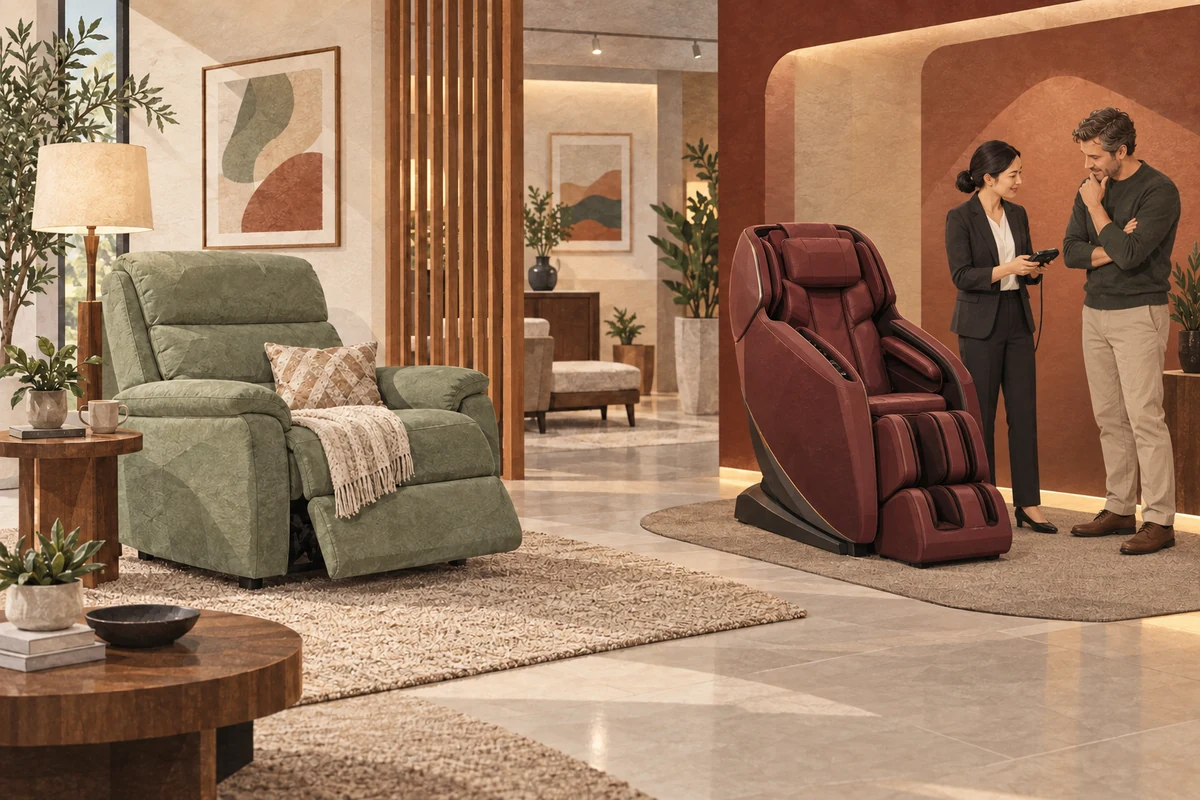
Then separate the stories. Present the sofa in a believable room and let people sit in it normally. Demonstrate the chair with a short, easy-to-follow session. Putting both under the same vague promise of relaxation makes the choice harder than it needs to be.
For Retailers: Sell the Decision, Not the Specification Sheet
A long feature list can make two products appear more similar than they are. A better sales conversation begins with the customer's room, routine, and desired experience.
- For a massage sofa, show upholstery choices, seat feel, normal sitting posture, controls, and how the piece fits with other furniture.
- For a massage chair, show user fit, massage path, recline movement, program selection, entry and exit, and any calf or foot functions included in that exact model.
The result is a simpler promise: the sofa makes everyday seating more relaxing; the chair makes massage easier to bring into a daily routine.
Questions Buyers Often Ask
Is a massage sofa just a cheaper massage chair?
No. Price and features vary widely, but the more useful distinction is purpose. A massage sofa is designed to work as furniture first; a massage chair is designed around the massage system.
Does a massage sofa always take less space?
No. Some sofa-style recliners are wide, and some massage chairs use space-saving recline structures. Compare the dimensions in normal use and at full recline.
Can a massage sofa provide full-body massage?
Some models include more functions than others, but a sofa-style product should not be assumed to match the coverage or movement of a full-body chair. Check the actual mechanism and massage areas.
Which product is easier to explain online?
A massage chair benefits from short demonstrations of movement and programs. A massage sofa benefits from room photography that first proves it is attractive, usable furniture. In both cases, show scale and function rather than relying on adjectives.
The Best Choice Should Feel Obvious in the Room
If the product needs to disappear into daily life, begin with a massage sofa. If the user wants to set aside time and space for a more complete massage experience, begin with a massage chair.
Sweet Home develops both categories for brands, distributors, and retailers. If you are comparing models, send us your target room, user group, required functions, and market through our contact page. We can help narrow the specification before samples and packaging turn a simple question into an expensive one.
Kimi
Sweet Home Technical Team
Part of Sweet Home's in-house technical team. Kimi writes our product comparison guides, room-fit and buying-advice pieces for massage sofas and massage chairs, built on our export order data and after-sales records.
Disclosure: Sweet Home is the manufacturer behind the massage sofas and chairs compared in this guide, and the experience patterns above come from our own orders and after-sales records. Share this comparison with a dealer or specifier who is deciding between the two lines.
Quick audit: which seat fits the room and the routine?
1. Is the seat expected to work as everyday furniture?
2. Is a structured full-body session the main use?
3. Have you compared open and reclined dimensions?
4. Is the compliance story confirmed for the model and market?
Two or more unchecked? Send us your current spec.