
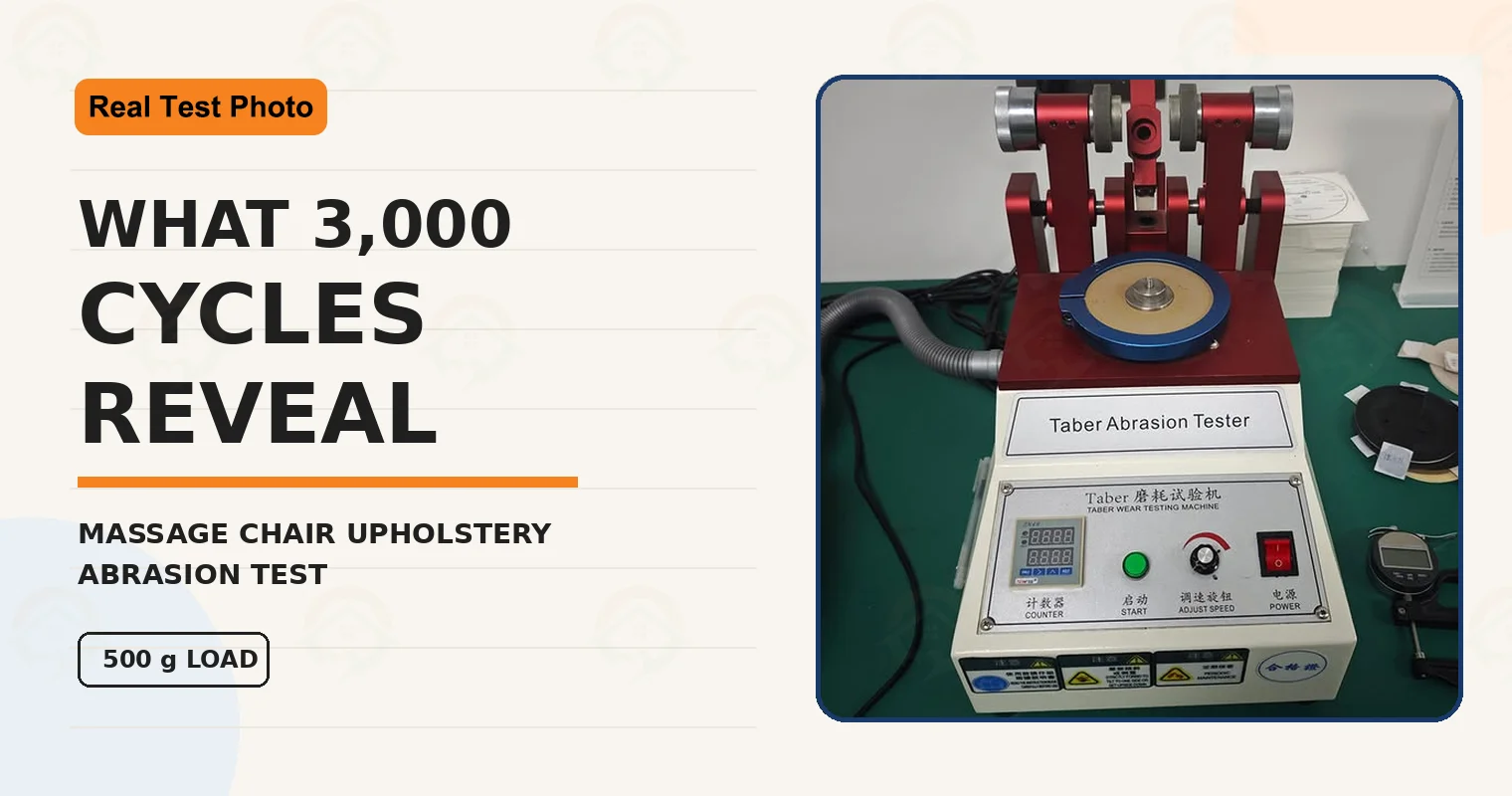
Massage chair leather durability rarely announces itself at first touch—it shows up later, when the armrest starts peeling.
A massage chair can have whisper-quiet motors, clever programs and a beautiful touchscreen. If the upholstery starts peeling at the armrest, however, that is the only feature the customer will remember.
That is why leather durability should not be judged by a showroom touch test alone. For the sample documented here, Sweet Home used a rotary-platform abrasion test for 3,000 cycles under a 500 g load.
The result is useful—but only when you understand what the test can prove, what it cannot prove, and which details belong in a supplier report.
What is happening during the abrasion test?
A flat upholstery specimen is fixed to a rotating platform. Abrasive wheels press against the surface while the sample turns, creating repeated rubbing along a circular path. Instead of waiting months for a chair to collect scuffs, the test creates controlled wear in a much shorter time.
The setup may look simple, but four inputs shape the result: the abrasive wheel, the applied load, the cycle count and the pass/fail rule.
“Passed 3,000 cycles” is therefore not a complete specification by itself. Two suppliers can quote the same cycle count while using different wheels or judging the surface by different criteria.
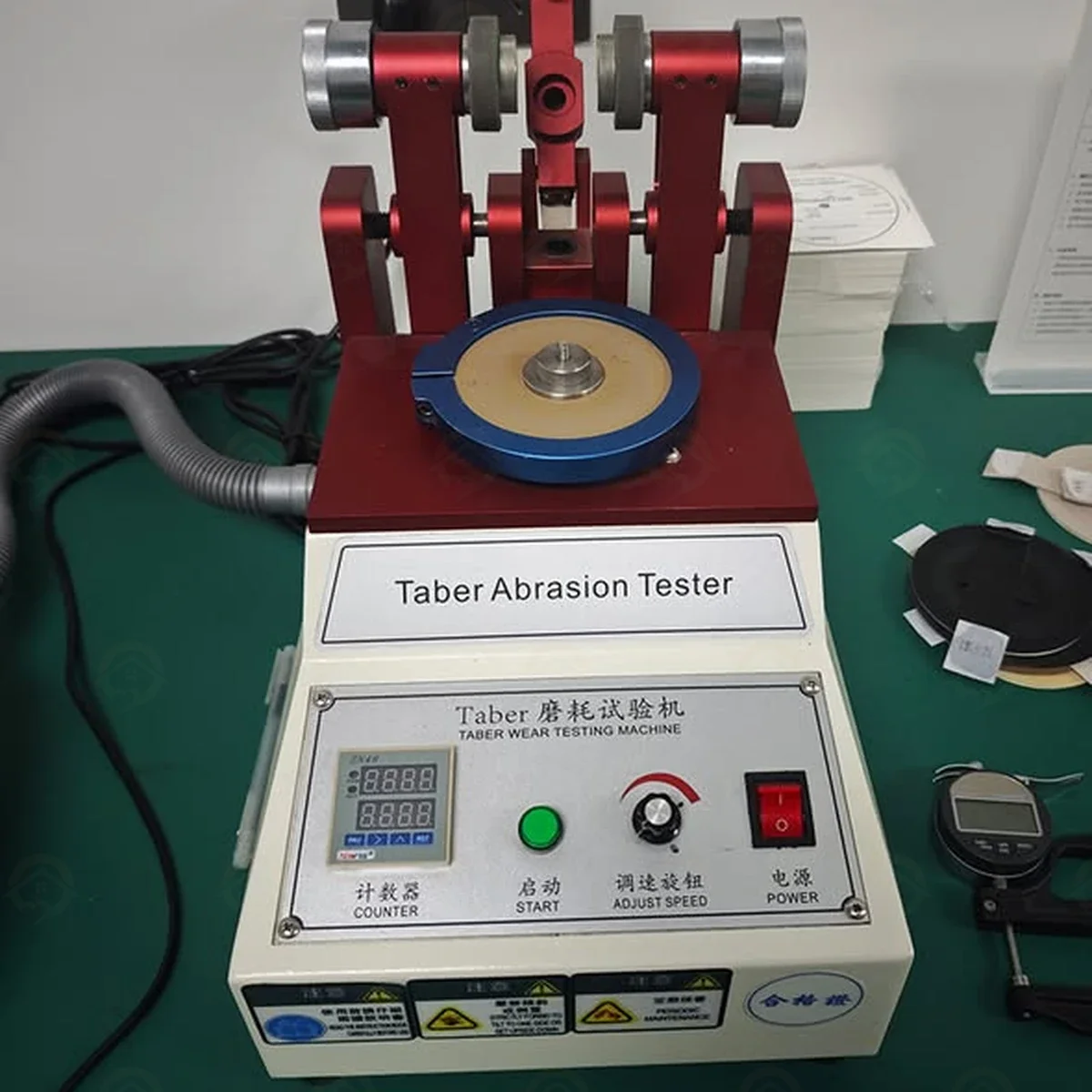
The real abrasion tester used for this sample. A controlled setup makes results repeatable; the full test recipe makes them comparable.
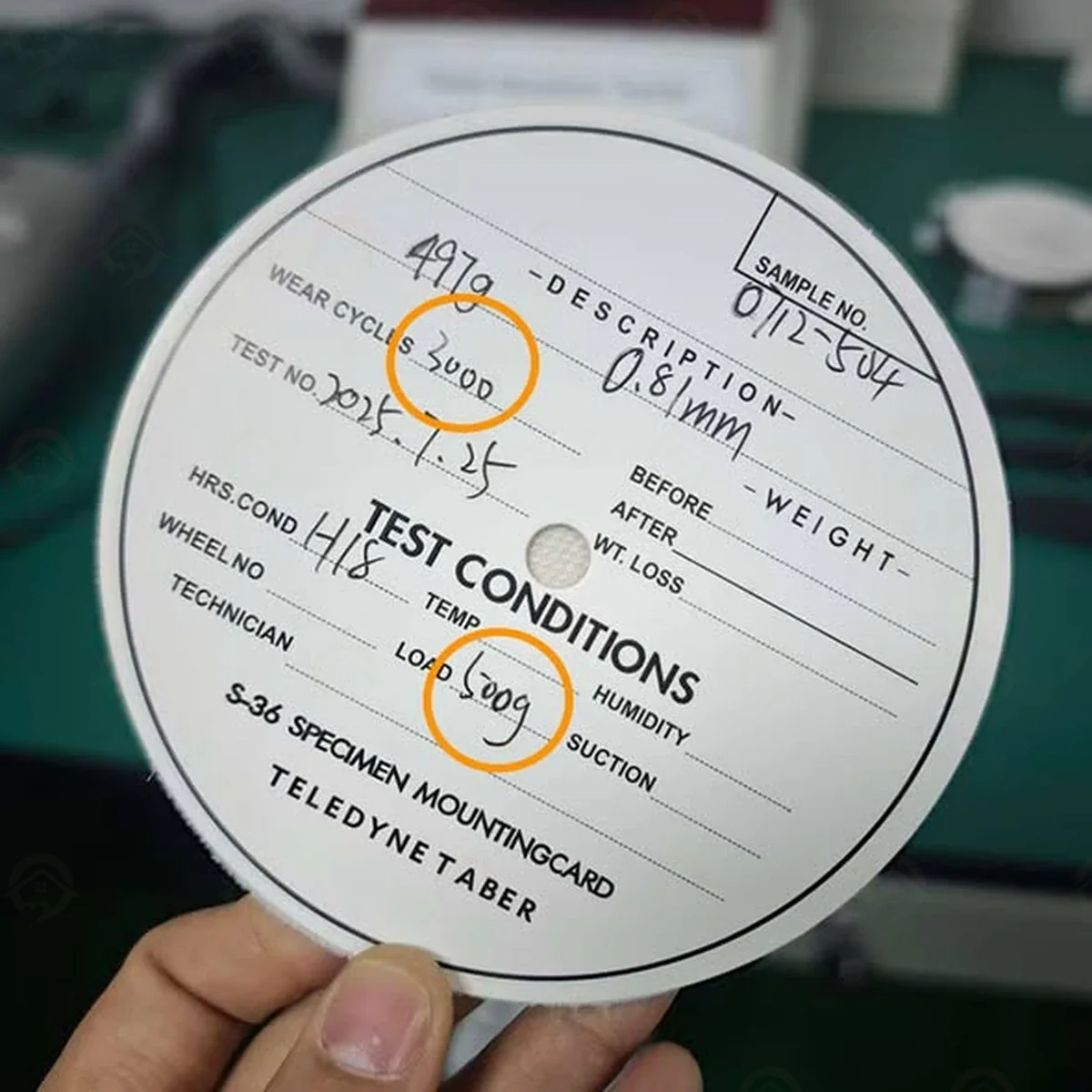
The test record shown in the factory photo identifies 3,000 cycles and a 500 g load. Buyers should also request the wheel type and pass/fail criteria.
What the real sample shows
The factory record photographed with this sample shows 3,000 wear cycles and a 500 g load. The before-and-after photos let us inspect the areas a buyer will notice first: coating loss, exposed backing, peeling, obvious color change and a major change in surface grain.
On this photographed specimen, the wear path is visible as circular tracks, but there is no obvious peeling or exposed base fabric. That is a useful abrasion-screening result. It is more credible than calling the surface “wear-proof,” because no upholstery is.
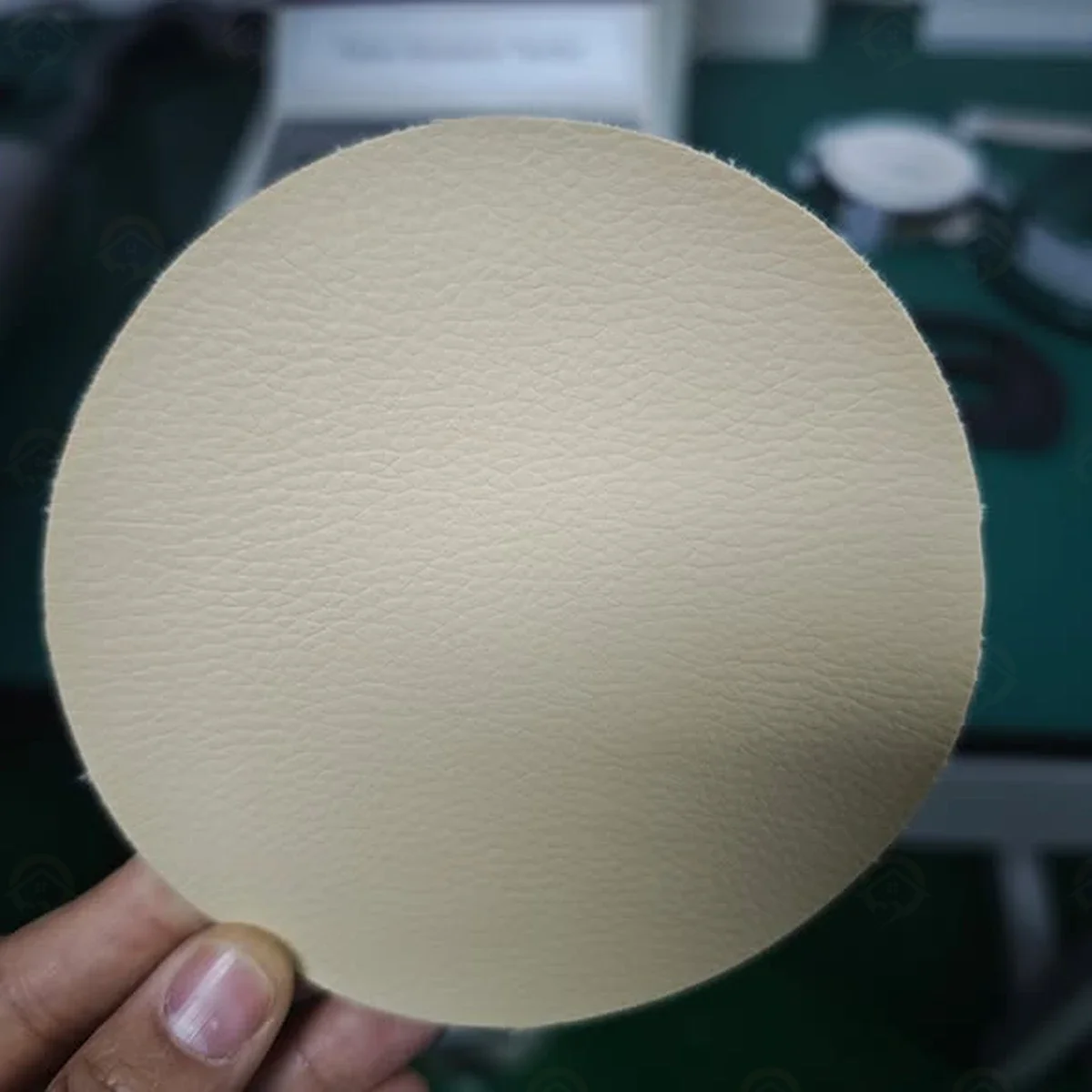
Before testing: photograph color, grain and gloss under consistent lighting so the post-test comparison has a reliable baseline.
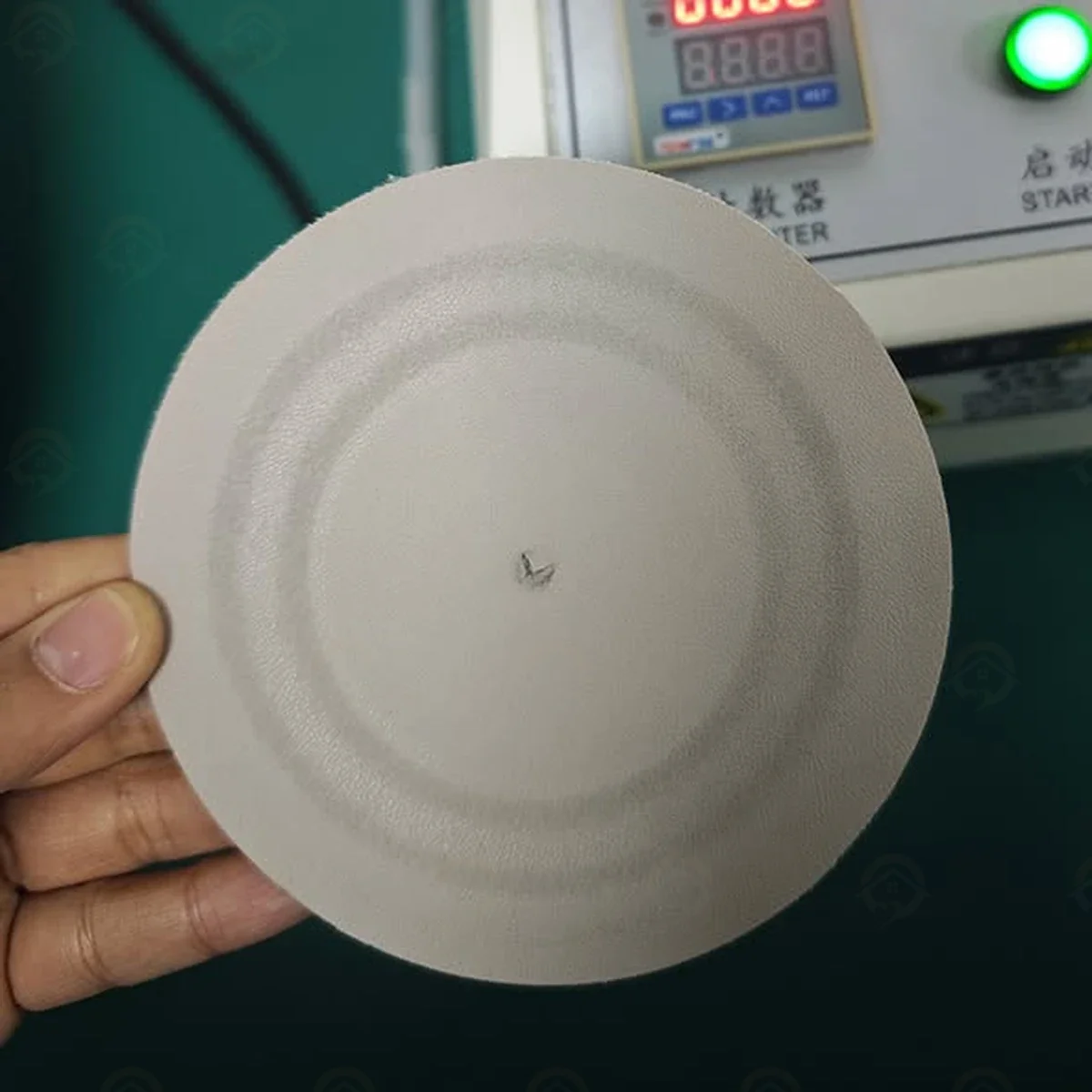
After 3,000 cycles: the circular contact tracks are visible, while this photographed sample shows no obvious peeling or exposed backing.
What 3,000 cycles do—and do not—tell you
The test helps a factory compare material lots, check whether a coating is wearing through too quickly and catch obvious variation before upholstery reaches assembly. It is especially relevant around high-contact zones such as armrests, shoulder panels, seat edges and calf sections.
But a rotary abrasion test is not a time machine. It does not convert neatly into “three years of use,” because real chairs face other stresses: body oils, perspiration, cleaning chemicals, heat, humidity, repeated flexing and seam tension.
ASTM guidance for rotary-platform abrasion testing likewise warns that laboratory results should be related to actual end-use trials before making definite service-life predictions.
Why this matters to a distributor
Upholstery failure is unusually visible. A noisy motor may need diagnosis; a peeling armrest announces the problem from across the showroom. The direct cost can include replacement covers, technician time, freight and a chair taken out of service. The quieter cost is a customer who stops trusting the product.
Commercial and demo units deserve extra attention because different users slide into the seat, rub against the side panels and clean the chair in different ways. In this setting, a repeatable abrasion screen is not a decorative line on a specification sheet.
Five questions to send your massage chair supplier
- Which exact test method did you use? Ask for the standard number or the factory's written internal procedure.
- Which abrasive wheel, load and cycle count were used? These inputs belong together.
- How is a pass decided? Look for defined checks such as coating wear-through, peeling, exposed backing, color change or mass loss—not “looks fine.”
- Can the report be traced to my material lot? A supplier certificate from last year does not confirm the upholstery being cut for your order today.
- Which other risks are tested? Ask about hydrolysis, flexing, seam strength, color transfer and resistance to the approved cleaning agents for your market.
A strong answer should connect the sample, test settings, photos, result and production batch. If one link is missing, ask for a material swatch and arrange an independent test before approving mass production.
A better specification starts with a better question
“Is the leather durable?” invites a yes. “Show me the lot-specific abrasion report, test recipe and acceptance criteria” invites evidence.
For OEM projects, Sweet Home can discuss upholstery grades, intended use and verification requirements before production. Contact us to request material samples or review the abrasion documentation for your massage chair program.
Prepared by Sweet Home Technical Team
Cindy
Sweet Home Technical Team
Part of Sweet Home’s in-house technical team. Cindy writes our Knowledge content — how a massage chair works, what sits inside it, and what to check before you buy — built on our engineering documentation and after-sales records.
Disclosure: Sweet Home is the manufacturer behind the massage chairs described here, and the technical details in this article come from our own engineering and production experience.
Ask for the abrasion report behind your leather spec
1. Lot-specific Taber data, not a generic certificate? 2. Test method, wheel and load documented? 3. Material swatch available before mass production?
Two or more unchecked? Send us your current specification.